How to Protect Your Eyes From Injuries When Playing Sports
Table of Contents
Sports eye injuries can happen in seconds during activities involving fast-moving balls, sticks, elbows, fingers, or debris. Proper eye protection for sports lowers the chance of cuts, blunt trauma, and other damage that can affect vision. Athletes who wear glasses or contact lenses still need sport-specific protection. Choosing gear that matches the sport can improve sports eye safety.
What Sports Cause the Most Eye Injuries?
Sports with fast-moving objects or frequent body contact carry a higher risk of eye injury. Basketball is a common source of sports-related eye injuries in teens and adults, while baseball eye injuries can occur when a ball, bat, or equipment strikes the face.
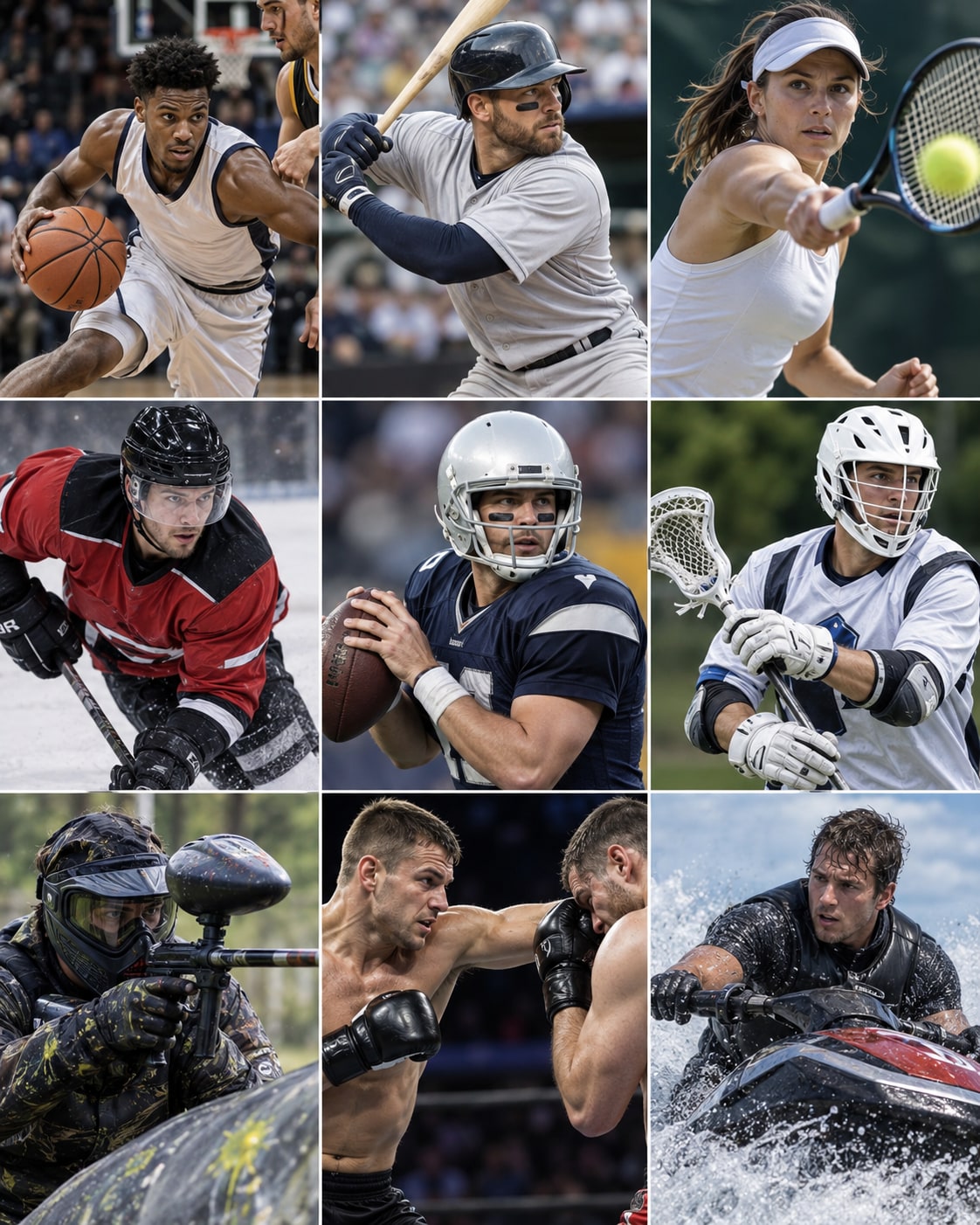
Sports linked with eye injuries include:
Basketball
Baseball and softball
Racquet sports
Hockey and football
Lacrosse
Paintball
Combat sports
Swimming and other water sports
What Are the Most Common Sports-Related Eye Injuries?
Eye injuries in sports range from surface damage to serious internal trauma.
Corneal abrasions can happen when a finger, dirt, or equipment scratches the front of the eye.
Blunt trauma from a ball, elbow, puck, or other object can cause swelling, bleeding inside the eye, or damage around the eye socket.
Cuts and penetrating injuries can occur when a sharp object reaches the eye.
Retinal injuries can follow a strong impact and affect vision.
Sudden blurry vision, bleeding, flashes, new floaters, or double vision after an impact should be checked by an eye doctor.
How Can You Prevent Sports Eye Injuries?
Several precautions can lower the risk of sports eye injuries during practices, games, and recreational play.
Wear Protective Eyewear for Sports
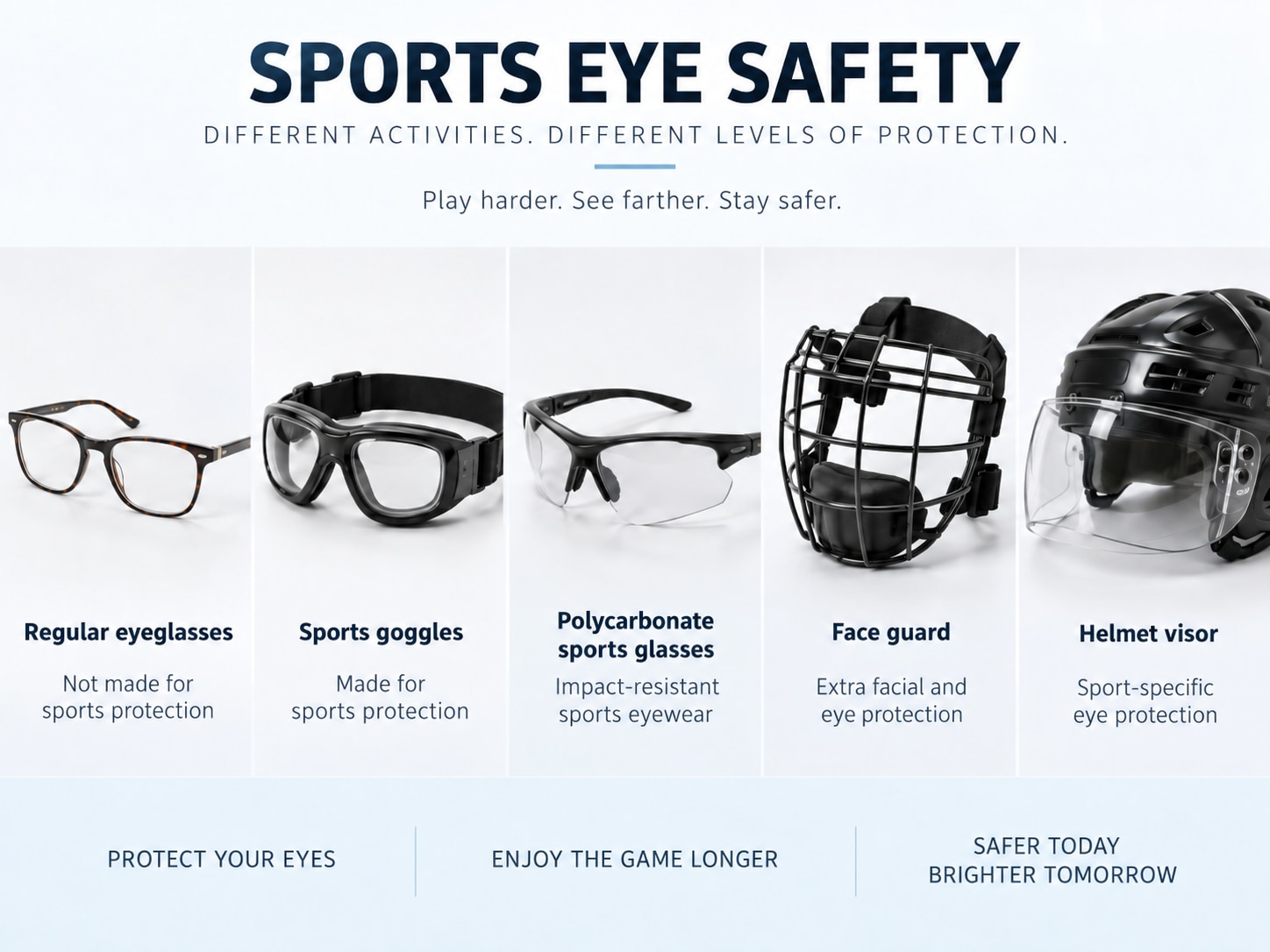
Protective eyewear for sports should match the activity and expected level of impact. Regular eyeglasses and sunglasses aren’t built to take the place of sports eyewear. Athletes can use sports goggles, sports safety glasses, face guards, a face mask, or a helmet visor.
Choose Polycarbonate Sports Glasses or Goggles
Polycarbonate sports glasses resist impact better than ordinary lens materials. Protective sports goggles with polycarbonate lenses suit activities where balls, equipment, or body contact can reach the eyes.
Use Prescription Sports Goggles When Needed
Athletes who need vision correction can choose prescription sports goggles instead of regular eyeglasses during play.
When selecting sports eyewear:
Look for sport-specific safety standards such as ASTM F803 where applicable.
Check that the frame stays secure during movement.
Choose hockey eye protection, football face guards, or similar gear suited to the activity.
Replace scratched lenses, loose frames, stretched straps, or damaged equipment.
Can You Wear Contact Lenses While Playing Sports?
Contact lenses and sports can work together when an athlete also wears suitable protective gear. Contacts correct vision, but they don’t shield the eyes from a ball, finger, elbow, stick, or other impact.
Wear Contact Lenses With Protective Sports Goggles
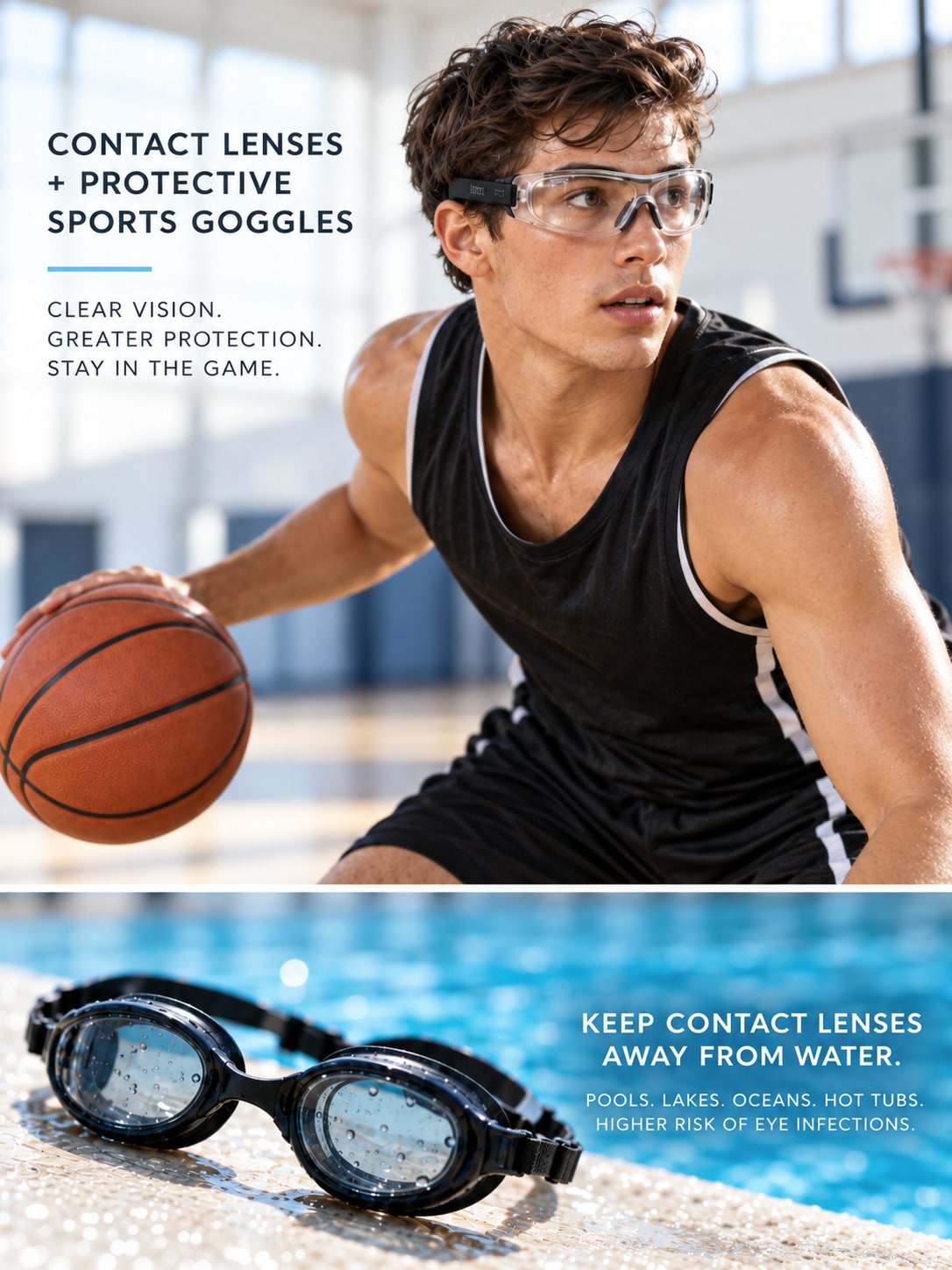
Contact lenses can be worn under non-prescription sports goggles for clear vision without regular eyeglass frames. Protective sports goggles are still needed when the activity calls for impact protection.
Keep Contact Lenses Away From Water
Contact lenses shouldn’t be exposed to pool, lake, ocean, or tap water. Water can carry microorganisms that can attach to lenses and raise the risk of eye infection. Prescription swim goggles are an alternative for people who need clearer vision in the water.
How Can You Protect Children's Eyes During Sports?
Children need sports eyewear that fits correctly and stays secure during movement. Parents and coaches can help young athletes follow sports eye safety habits by checking that:
Protective eyewear matches the sport.
Frames and straps fit securely.
Goggles stay in place during movement.
Scratched lenses or damaged equipment are replaced.
Eye protection is worn during both practices and games.
What Should You Do After Getting Hit in the Eye?
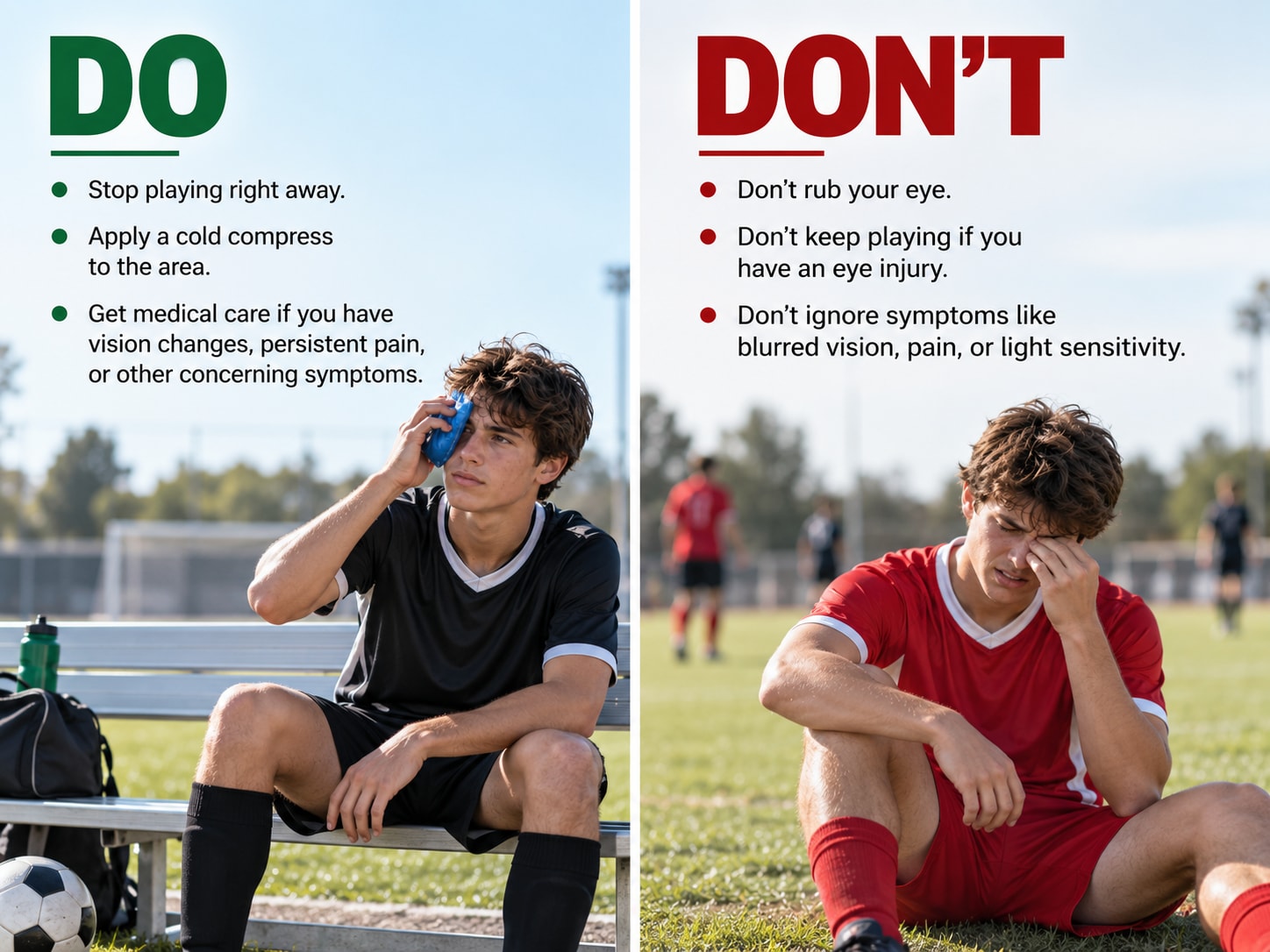
Stop playing after a hard hit to the eye. Avoid rubbing, pressing, or trying to remove an object stuck in the eye.
Keep pressure off the eyeball.
Place a cold compress gently around the injured area.
Watch for changes in vision, pain, swelling, or bleeding.
When Should You See an Eye Doctor?
Seek urgent medical care after a sports eye injury if you notice:
Sudden blurry or reduced vision
Severe eye pain
Bleeding
Double vision
Flashes or new floaters
A cut or puncture to the eye
An object stuck in the eye
Serious sports-related eye injuries aren’t always obvious immediately after impact, so persistent symptoms should receive medical attention.
FAQs About Protecting Your Eyes When Playing Sports
What Is the Best Eye Protection for Sports?
The right protection depends on the sport. Sports goggles with impact-resistant polycarbonate lenses, face guards, helmet visors, and other sport-specific equipment are common forms of eye protection for sports.
Can Regular Glasses Protect Your Eyes During Sports?
Regular eyeglasses aren’t designed as protective sports equipment. Sports safety glasses or goggles built for impact resistance are a safer choice during activities with a risk of eye injury.
What Does ASTM F803 Mean for Sports Eyewear?
ASTM F803 is a safety specification used for eye protectors in selected sports. Eyewear marked for the applicable standard has been tested for factors related to sports impact and performance.
Disclaimer: The content on this page is for informational purposes only and should not take the place of professional medical advice, diagnosis, or treatment.
References
Help Patients Keep Their Eyes on the Ball and Safe From Injury. https://www.aoa.org/news/clinical-eye-care/health-and-wellness/help-patients-keep-their-eyes-on-the-ball-and-safe-from-injury. Accessed September 7, 2026.
How to Stay Safe From Sports-Related Eye Injuries. https://www.uclahealth.org/news/article/how-stay-safe-sports-related-eye-injuries. Accessed September 7, 2026.
Sports and Eye Safety. Tips for Parents and Teachers. https://www.nei.nih.gov/eye-health-information/healthy-vision/how-eyes-work/sports-and-eye-safety-tips-parents-and-teachers. Accessed September 7, 2026.
Sports Eye Protection. https://www.moorfields.nhs.uk/ae/patient-guides/sports-eye-protection. Accessed September 7, 2026.
Sports Eye Safety. https://preventblindness.org/sports-eye-safety/. Accessed September 7, 2026.
Sports Eye Safety. https://www.aao.org/eye-health/tips-prevention/injuries-sports. Accessed September 7, 2026.