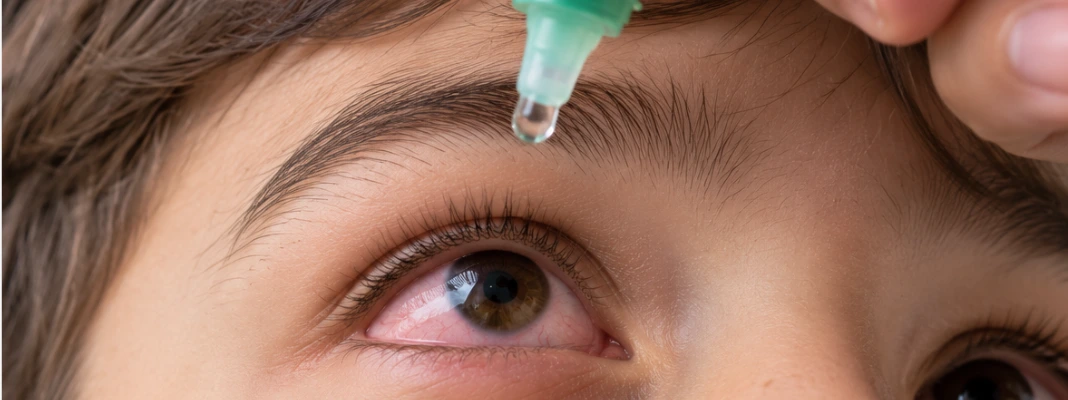
Your contact lenses feel dry or irritated, so reaching for the nearest bottle of eye drops can seem like a quick fix. But can you use eye drops with contacts still in your eyes? Sometimes, but only eye drops specifically labeled for contact lens wear should be used while your lenses are in.
This matters because contacts wear and dry eye often overlap. The National Eye Institute notes that nearly 16.4 million Americans have dry eyes and lists contact lens wear as one of the factors that can contribute to it. Checking the label before using any drops can help you avoid irritation and know when ongoing dryness or discomfort needs more than temporary relief.
Can You Use Eye Drops With Contacts While Wearing Them?
Yes, but only certain eye drops can be used while your contact lenses are in. If the label specifically says the drops are for use with contact lenses, use them exactly as directed. If it does not, remove your lenses and follow the product instructions or your eye care professional’s guidance before putting them back in.
Do not rely on eye drops to cover up significant redness or ongoing discomfort while you keep wearing your contacts. If you develop worsening eye pain, light sensitivity, sudden blurry vision, unusual tearing, or discharge, remove your lenses and call an eye doctor promptly. If the lenses on your prescription are daily wear contact lenses, the same rule applies: use only drops whose label specifically permits use during contact lens wear.
Do you often need eye drops while wearing contacts to stay comfortable? Learn how to choose contact lenses for your lifestyle and what factors may affect everyday comfort and wear.
Which Eye Drops Are Safe to Use With Contacts?
The safest eye drops with contact lenses are products whose label specifically says they can be used while your lenses are in. Terms such as “lubricating,” “artificial tears,” or “preservative-free” describe the product, but none of those terms alone confirms that the drops are compatible with your contacts.
Contact Lens Rewetting Drops
Contact lens rewetting drops are made to lubricate your eyes and lenses during wear when the product label says they can be used with contacts. They can ease temporary dryness or make a lens feel less noticeable without requiring you to take it out first. The American Optometric Association recommends choosing lubricating drops approved for contact lens wear and checking with your optometrist about compatibility with your lens material.
Rewetting drops are not the same as contact lens cleaning or disinfecting solutions. They do not replace the cleaning, disinfection, and storage routine required for reusable contact lenses.
Artificial Tears and Lubricating Drops
Artificial tears add lubrication to the eye and are a common treatment for mild dry-eye symptoms, but artificial tears with contacts are not automatically appropriate while your lenses are in. Some formulas are labeled for contact lens wear, while others instruct you to remove your lenses before use. If dryness is most noticeable during long screen sessions, ask your eye care professional whether contact lenses for computer use match your prescription and comfort needs rather than relying on extra drops alone.
If you are shopping for lubricating eye drops for contacts, check the package for wording that specifically permits use with contact lenses rather than relying on the words “artificial tears” or “dry eye.” If the directions are unclear, take your contacts out and ask your eye care professional before using the drops over your lenses.
Preservative-Free Drops Are Not Automatically Contact-Safe
Preservative-free eye drops for contacts can be useful for people who are sensitive to certain ingredients, but “preservative-free” does not by itself mean a product should be applied over a contact lens. Contact lens compatibility is a separate instruction, so check the label for wording that specifically permits use while your lenses are in.
If you are unsure whether a preservative-free product is also one of the contact-safe eye drops for your particular lenses, remove your contacts first and ask your optometrist or ophthalmologist.
Not sure whether dryness or allergies are making your contacts uncomfortable? Learn how to tell dry eyes from eye allergies and what symptoms may point to each.
Which Eye Drops Should You Avoid While Wearing Contacts?
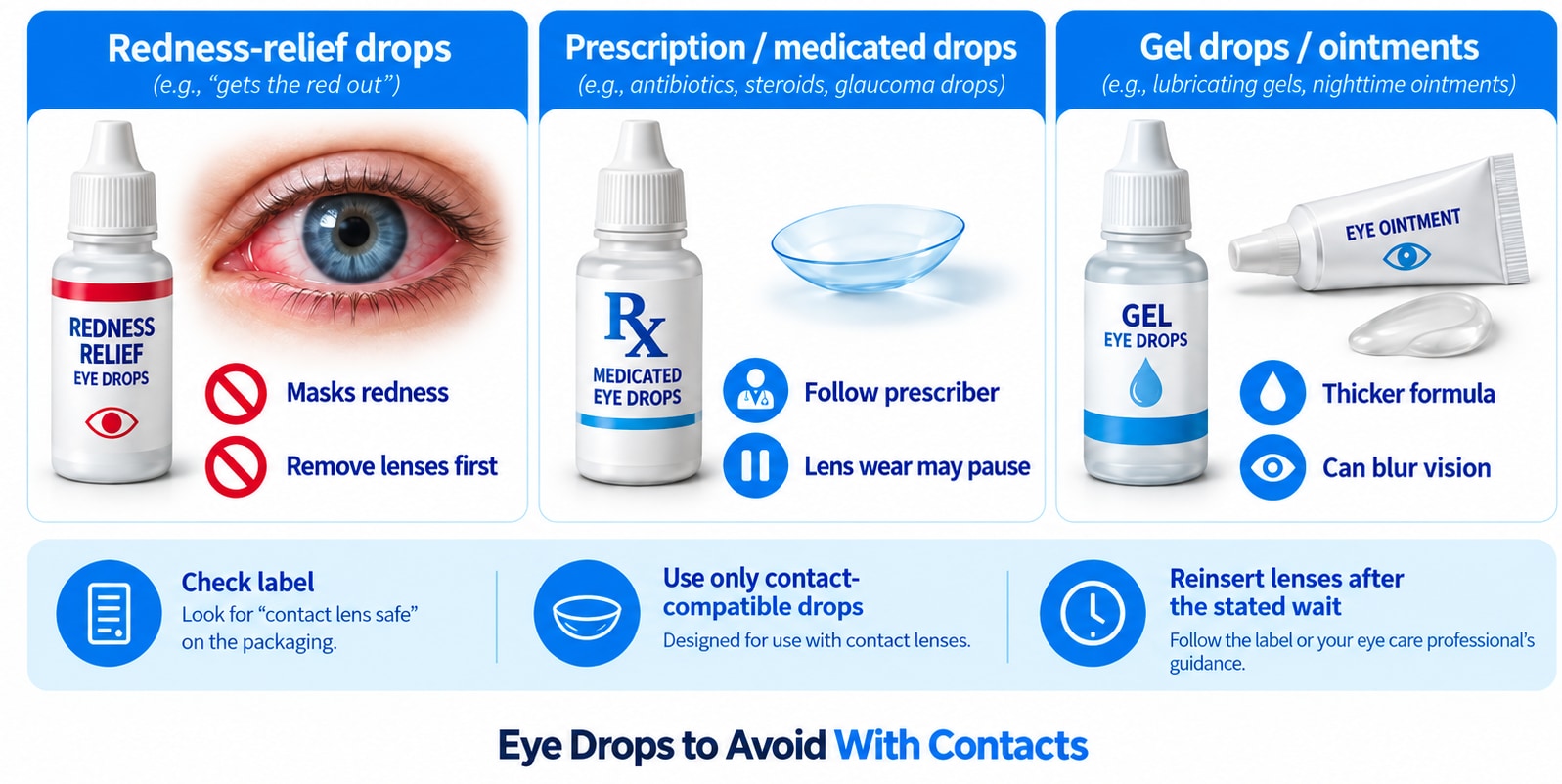
Some eye drops should not be applied while your contacts are still in unless the product label or your eye care professional specifically says they are compatible with lens wear. If the directions tell you to remove your lenses, follow the stated waiting period before putting them back in rather than assuming the same timing applies to every product.
Redness-Relief Drops
Redness-relief drops that promise to “get the red out” generally should not be used while you are wearing contacts unless an eye care professional tells you otherwise. These drops commonly work by narrowing visible blood vessels on the surface of the eye, which can make the eye look less red without addressing why the redness started. The American Optometric Association advises contact lens wearers to avoid these products unless professionally directed.
If your eyes become red while you are wearing contacts, take the lenses out instead of using redness-relief drops to hide the symptom. Redness accompanied by worsening pain, light sensitivity, sudden blurry vision, unusual tearing, or discharge warrants prompt evaluation by an eye doctor.
Prescription and Medicated Drops
Prescription and medicated eye drops include antibiotics, anti-inflammatory medicines, glaucoma medications, and treatments for other eye conditions. Whether you can wear contacts during treatment depends on the medication, the condition being treated, and the instructions from your prescriber. Do not assume that a prescription drop can be used over your lenses simply because it is intended for the eyes.
Follow the medication label and your optometrist’s or ophthalmologist’s directions about removing your contacts, how long to wait before reinserting them, and when lens wear can resume. If the medication is being used for an eye infection or you develop unusual irritation, your doctor may have you stop wearing contacts while your eye recovers. CDC guidance also recommends removing contact lenses and calling an eye doctor promptly when symptoms such as worsening pain, redness, light sensitivity, sudden blurry vision, or discharge occur.
Gel Drops and Eye Ointments
Gel drops and eye ointments have thicker formulations than standard liquid drops and can temporarily blur your vision. Many are meant to be used without contact lenses in place, so remove your contacts whenever the product label instructs you to do so. Current U.S. drug labeling for several ophthalmic lubricant ointments, for example, specifically directs users to remove contact lenses before application.
Do not assume that every gel or ointment follows the same directions. Check the package for contact lens instructions and follow any stated reinsertion time, especially if you are using the product for ongoing dryness or another eye condition.
Did an eye drop make your contacts sting or burn? See what can cause burning contacts and what you can do next.
How Can You Tell if Eye Drops Are Safe for Contacts?
The quickest way to identify contact-safe eye drops is to read the label rather than rely on terms such as “lubricating,” “dry eye,” or “preservative-free.” FDA guidance for contact lens products stresses following labeling instructions and your eye care professional’s directions, including expiration and discard dates.
Before using a new eye drop, check these five things:
- Does the label specifically say the drops can be used with contact lenses? Look for directions that clearly address contact lens wear rather than assuming an eye drop is compatible because it is sold for dryness or irritation.
- Does the label tell you to remove your contacts first? If it does, take them out before applying the drops. Do not leave the lenses in simply because you have previously used a similar product.
- Is there a waiting period before you can put your contacts back in? Follow the exact time stated on the product or given by your prescriber. Different medications and formulations can have different instructions.
- Are the drops intended for the symptom you are treating? Dryness, allergies, redness, infection, and other eye problems are not treated with the same types of drops. If you are unsure why your eye is bothering you, avoid trying multiple products while continuing to wear your contacts.
- Are the drops still within their expiration and discard dates? Check both the printed expiration date and any instructions about how long the product can be used after opening. The FDA advises against using contact lens products and solutions past their expiration or discard date.
If you wear 2-week contact lenses, follow the eye-drop waiting period as well as your prescribed cleaning, disinfection, and replacement routine.
What Eye Drops Can You Use for Dry Eyes With Contacts?
For occasional dryness, choose dry eye drops for contacts that are specifically labeled for use during contact lens wear. Contact lens rewetting or lubricating drops can add moisture and ease temporary dryness while your lenses are in, but not every artificial tear is contact-safe. If you are looking for eye drops for dry eyes with contacts, check the label carefully because some gels, ointments, prescription drops, and other dry-eye products require you to remove your lenses first.
If your contacts feel dry often, using more drops may not solve the underlying issue. Contact lens wear, screen use, wind, air conditioning, tear-film problems, lens fit, lens material, and wearing schedule can all contribute to dryness. If symptoms keep returning despite using compatible drops as directed, an optometrist or ophthalmologist can check your eyes and lenses to see what may be causing the discomfort.
Do your contacts become dry or blurry during long screen sessions? Explore contact lenses for screen time and eye comfort for additional ways to keep your eyes comfortable.
How Should You Use Eye Drops With Contact Lenses?
How you use eye drops with contact lenses depends first on whether the exact product is approved for use while your lenses are in. Read the directions before applying the drops, because some formulations can be used during lens wear while others require you to take your contacts out first.
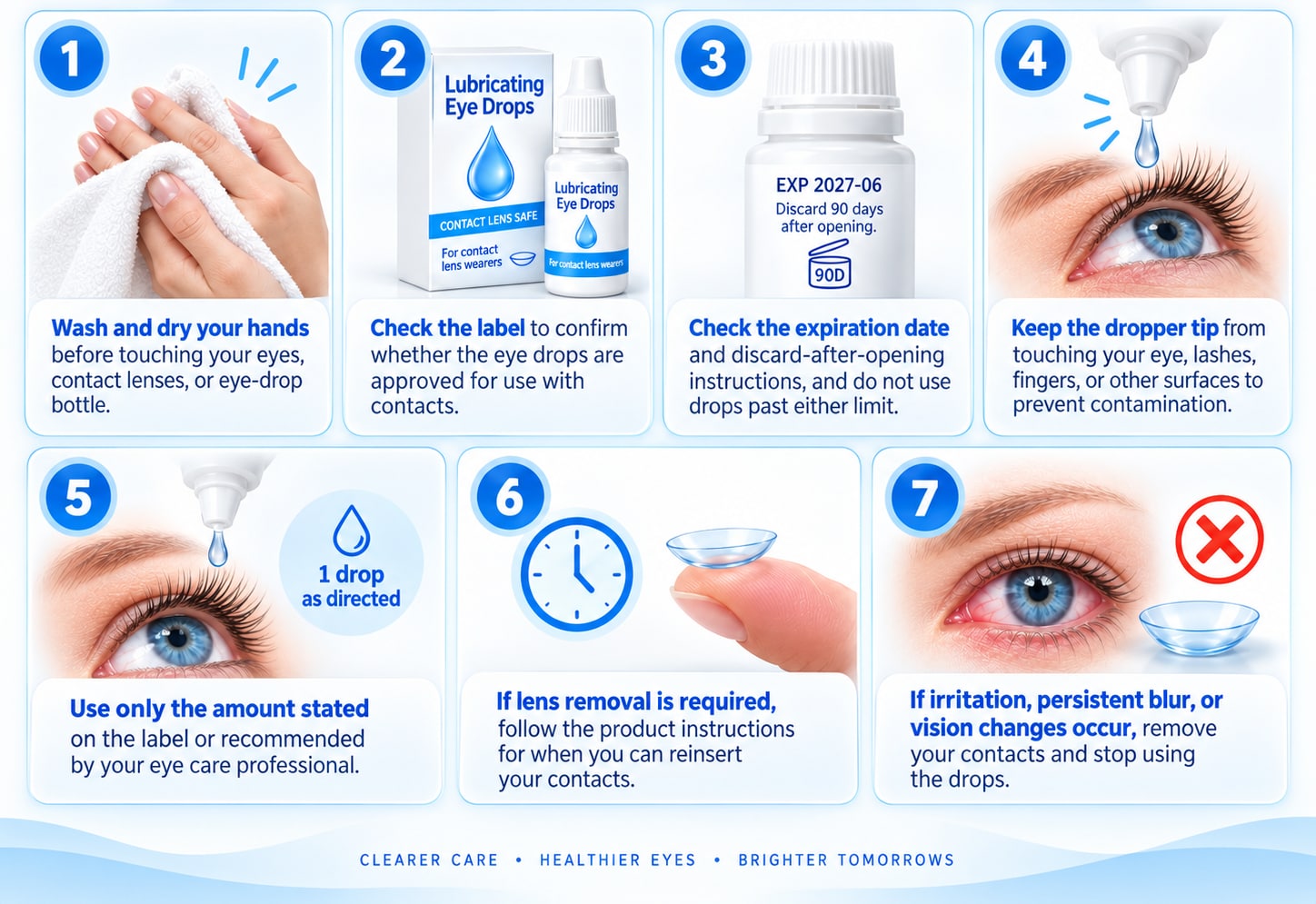
FDA guidance advises contact lens wearers to remove their lenses and contact an eye care professional if redness, pain, irritation, or vision changes develop.
If the Drops Are Approved for Contact Lens Wear
Leave your lenses in and use the drops exactly as directed if the label allows eye drops while wearing contacts. Follow the stated dose and frequency, and keep the bottle tip from touching your eye, lashes, or contacts. If you need drops often to stay comfortable, ask your eye care professional to check for dryness, lens-fit issues, or another cause.
If the Drops Require Lens Removal
Remove your contacts first if the label or your eye care professional tells you to. Discard daily disposable lenses after removal, while reusable lenses such as biweekly or monthly contacts should be cleaned, disinfected, and stored according to their prescribed care routine before reuse. Follow your lens replacement schedule and the eye-drop instructions for when contacts can be worn again.
If your prescription is for 30 day contact lenses, clean, disinfect, and store them according to the prescribed care routine before reuse.
What Mistakes Should You Avoid When Using Eye Drops With Contacts?
Even if you choose the right eye drops, a few everyday mistakes can make your contacts less comfortable or introduce germs into your eye. Most are easy to avoid once you know what to watch for.
- Using drops without checking whether the label permits use with contact lenses. Artificial tears, allergy drops, redness relievers, and medicated drops can have very different instructions.
- Touching the bottle tip to your eye, eyelashes, fingers, or another surface. Contact can contaminate the tip and transfer germs back into the bottle.
- Putting contacts back in too soon after a drop that requires lens removal. Use the waiting time on the product label or the instructions from your prescriber rather than relying on one standard interval.
- Applying more drops than directed because your lenses still feel dry. Frequent discomfort may be related to your tear film, lens fit, wear time, allergies, or another issue that adding more drops will not address.
- Skipping hand washing before handling your lenses or applying drops. Wash and dry your hands first, especially if you need to remove or reinsert your contacts.
If a drop causes burning, persistent blur, unusual redness, or worsening discomfort, remove your contacts rather than trying another dose. For wearers already prescribed one day contact lenses, a lens removed during the day should be discarded rather than cleaned and saved for reuse.
What Should You Do if You Use the Wrong Eye Drops With Contacts?
If you accidentally use the wrong eye drops with contacts, remove your lenses and stop using the drops until you confirm that they are compatible with contact lens wear. Accidental exposure does not automatically mean your eye has been injured, but continuing to wear the lenses can keep an incompatible product against the eye longer.
- Remove your contact lenses. If the eye drops make your contacts blurry, uncomfortable, or irritating, switch to glasses rather than trying to wear through the symptoms.
- Stop using the questionable drops. Check the package for contact lens warnings, removal instructions, and directions about when lenses can be reinserted.
- Handle the removed lenses according to their replacement schedule. If you are wearing a daily disposable lens and do not have concerning symptoms that require professional evaluation, discard it after removal. For reusable lenses, follow the approved cleaning, disinfection, and storage routine for that lens and care system.
- Do not rinse or store reusable lenses in tap water, distilled water, homemade saline, or another improvised liquid. The FDA recommends using only approved contact lens care products as directed because water exposure and improper lens care can raise the risk of serious eye infections.
- Ask an eye care professional or pharmacist if compatibility is unclear. Bring or identify the exact product so they can check its directions and tell you when it is appropriate to resume contact lens wear.
If you develop persistent redness, pain, light sensitivity, discharge, swelling, or changes in vision after accidentally using eye drops with contacts, keep your lenses out and contact an eye care professional promptly.
Did the wrong eye drops leave your lenses stinging or uncomfortable? See why contacts can burn and when persistent irritation deserves professional attention.
Using Eye Drops Safely With Contacts
You can use eye drops with contacts, but whether your lenses can stay in depends on the exact eye-drop formula and its directions. Contact lens rewetting drops are made for use during lens wear when labeled accordingly, while artificial tears, allergy drops, redness-relief drops, prescription medications, gels, and other products may require lens removal. Check the label rather than assuming that terms such as “lubricating” or “preservative-free” mean the drops are safe to apply over contacts. If dryness keeps returning or you develop pain, significant redness, light sensitivity, discharge, or sudden blurry vision, remove your lenses and contact an eye care professional.
Do your current lenses stay comfortable throughout the day, or do you regularly reach for eye drops to keep wearing them? Browse our contact lenses that match your current prescription, and talk with your eye care professional if dryness or irritation keeps returning.
Disclaimer: This content is for general informational purposes only and is not a substitute for professional advice, diagnosis, or treatment.
Learn More About Using Eye Drops With Contacts
Still have questions about using eye drops with contact lenses?These quick answers cover common concerns about safe use, timing, lens types, and when to check with an eye care professional.
Can You Use Regular Eye Drops With Contacts?
Not automatically. “Regular eye drops” can refer to artificial tears,
redness-relief drops, allergy medications, and other products with different directions
for contact lens wear. Only apply a drop while your contacts are in if its labeling
specifically permits it; if the instructions are unclear, remove your lenses and check
the label or ask an eye care professional before using it over your contacts.
Can You Use Allergy Eye Drops With Contacts?
It depends on the exact allergy eye drop and its instructions. Some allergy medications
direct you to remove your contacts before applying the drops and specify how long to
wait before reinserting them; for example, current olopatadine labeling instructs users
to remove contacts and wait at least 10 minutes, but that timing should not be assumed
for every allergy product. If your allergy symptoms are persistent, severe, or
accompanied by marked redness or pain, keep your lenses out and speak with an
optometrist or ophthalmologist.
How Long Should You Wait After Eye Drops Before Putting Contacts Back In?
The waiting time depends on the eye drop. Some products specify a particular
reinsertion interval, while other medications or eye conditions can require you to
leave your contacts out for longer. Follow the directions for the exact product or your
prescriber's instructions instead of using one waiting period for every type of eye drop.
Can You Use Contact Solution as Eye Drops?
No, contact lens cleaning or disinfecting solution should not be used as a substitute
for lubricating eye drops unless the product labeling specifically permits direct
application to the eye. Lens-care products have different jobs depending on the formula,
including cleaning, rinsing, disinfecting, and storing reusable contacts. The FDA
advises using contact lens products according to their labeling and warns that products
used incorrectly can cause serious eye problems.
Can You Use Eye Drops With Daily Disposable Contacts?
Yes, if the eye drops are specifically labeled for use with your contacts. A true daily
disposable lens is designed for one-time use, so if you remove it, discard it rather
than cleaning and saving it for later; use a fresh lens if you resume contact lens wear
that day. “Daily disposable” refers to the replacement schedule, while “daily wear”
describes lenses that are removed before sleeping and can include reusable lenses.
Can You Use Eye Drops With Monthly or Other Reusable Contacts?
Yes, when the eye-drop directions specifically permit use with the contacts you are
wearing. If the drops require you to take your reusable lenses out, handle, clean,
disinfect, and store them according to the prescribed care system before wearing them
again. Monthly and other planned-replacement lenses still need to be replaced on the
schedule prescribed by your eye care professional, even when they are cleaned correctly.
How Often Can You Use Rewetting Drops With Contacts?
Use contact lens rewetting drops only as often as the product label or
your eye care professional recommends. Needing drops frequently just to keep your
lenses comfortable can point to another issue, such as dryness, lens fit, wear time,
or environmental conditions, rather than a need to keep increasing the number of drops.
If discomfort keeps returning despite correct lens wear and compatible drops, schedule
an eye exam to find out what is causing it.
Are Preservative-Free Eye Drops Always Safe With Contacts?
No. “Preservative-free” describes one feature of an eye-drop formula, but it does not
automatically mean the product is approved for application while contact lenses are in
your eyes. Check for specific contact lens directions on the label or ask your eye care
professional before using preservative-free drops over your lenses.
Can You Use Regular Eye Drops With Contacts?
Not automatically. “Regular eye drops” can refer to artificial tears, redness-relief drops, allergy medications, and other products with different directions for contact lens wear. Only apply a drop while your contacts are in if its labeling specifically permits it; if the instructions are unclear, remove your lenses and check the label or ask an eye care professional before using it over your contacts.
Can You Use Allergy Eye Drops With Contacts?
It depends on the exact allergy eye drop and its instructions. Some allergy medications direct you to remove your contacts before applying the drops and specify how long to wait before reinserting them; for example, current olopatadine labeling instructs users to remove contacts and wait at least 10 minutes, but that timing should not be assumed for every allergy product. If your allergy symptoms are persistent, severe, or accompanied by marked redness or pain, keep your lenses out and speak with an optometrist or ophthalmologist.
How Long Should You Wait After Eye Drops Before Putting Contacts Back In?
The waiting time depends on the eye drop. Some products specify a particular reinsertion interval, while other medications or eye conditions can require you to leave your contacts out for longer. Follow the directions for the exact product or your prescriber's instructions instead of using one waiting period for every type of eye drop.
Can You Use Contact Solution as Eye Drops?
No, contact lens cleaning or disinfecting solution should not be used as a substitute for lubricating eye drops unless the product labeling specifically permits direct application to the eye. Lens-care products have different jobs depending on the formula, including cleaning, rinsing, disinfecting, and storing reusable contacts. The FDA advises using contact lens products according to their labeling and warns that products used incorrectly can cause serious eye problems.
Can You Use Eye Drops With Daily Disposable Contacts?
Yes, if the eye drops are specifically labeled for use with your contacts. A true daily disposable lens is designed for one-time use, so if you remove it, discard it rather than cleaning and saving it for later; use a fresh lens if you resume contact lens wear that day. “Daily disposable” refers to the replacement schedule, while “daily wear” describes lenses that are removed before sleeping and can include reusable lenses.
Can You Use Eye Drops With Monthly or Other Reusable Contacts?
Yes, when the eye-drop directions specifically permit use with the contacts you are wearing. If the drops require you to take your reusable lenses out, handle, clean, disinfect, and store them according to the prescribed care system before wearing them again. Monthly and other planned-replacement lenses still need to be replaced on the schedule prescribed by your eye care professional, even when they are cleaned correctly.
How Often Can You Use Rewetting Drops With Contacts?
Use contact lens rewetting drops only as often as the product label or your eye care professional recommends. Needing drops frequently just to keep your lenses comfortable can point to another issue, such as dryness, lens fit, wear time, or environmental conditions, rather than a need to keep increasing the number of drops. If discomfort keeps returning despite correct lens wear and compatible drops, schedule an eye exam to find out what is causing it.
Are Preservative-Free Eye Drops Always Safe With Contacts?
No. “Preservative-free” describes one feature of an eye-drop formula, but it does not automatically mean the product is approved for application while contact lenses are in your eyes. Check for specific contact lens directions on the label or ask your eye care professional before using preservative-free drops over your lenses.
References
Contact Lens Care. U.S. Food and Drug Administration. https://www.fda.gov/consumers/womens-health-topics/contact-lens-care. Date Accessed: September 14, 2026.
Contact Lens Risks. U.S. Food and Drug Administration. https://www.fda.gov/medical-devices/contact-lenses/contact-lens-risks/. Date Accessed: September 14, 2026.
What Causes Contact Lens-related Eye Infections. Centers for Disease Control and Prevention. https://www.cdc.gov/contact-lenses/causes/index.html. Date Accessed: September 14, 2026.
Contact Lens Care. American Optometric Association. https://www.aoa.org/healthy-eyes/vision-and-vision-correction/contact-lens-care. Date Accessed: September 14, 2026.
Dry Eye. National Eye Institute. https://www.nei.nih.gov/eye-health-information/eye-conditions-and-diseases/dry-eye. Date Accessed: September 14, 2026.