No, you shouldn’t wear contact lenses with a stye. A stye is a painful red bump on or inside the eyelid, and wearing contact lenses can irritate the area and expose your lenses to bacteria. The American Academy of Ophthalmology recommends avoiding contact lenses while you have a stye or chalazion.
Switching to glasses gives your eyelid time to heal without a lens rubbing near the swollen area. Once the stye is gone and your eye feels normal again, you can usually return to wearing contact lenses.
Table of Contents
What Is a Stye?
A stye, also called a hordeolum, is a small, painful lump that develops along the eyelid. Most styes are associated with a bacterial infection in an eyelash follicle or one of the small oil glands in the eyelid.
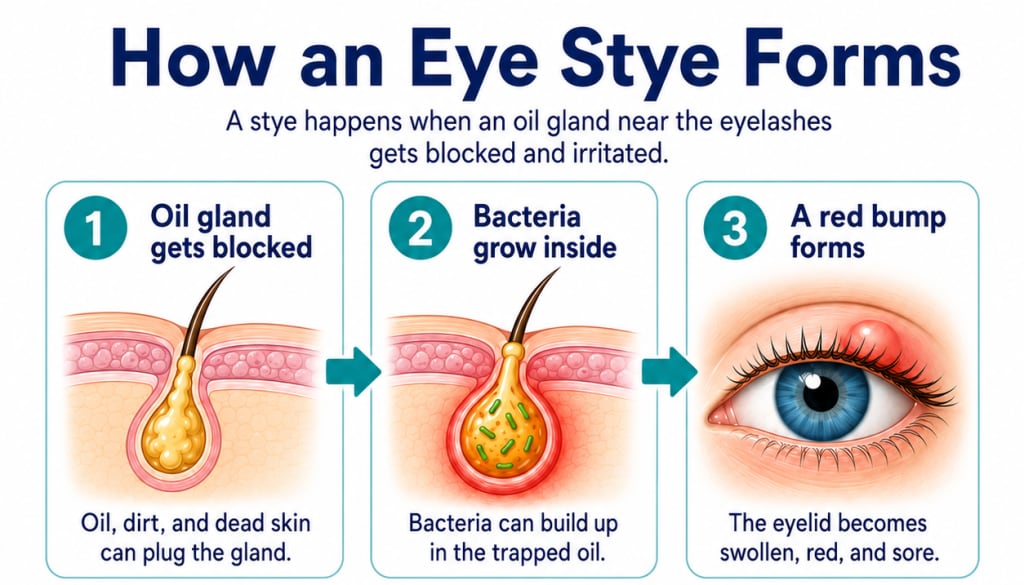
There are two main types:
- External styes develop near the base of an eyelash and can look similar to a pimple.
- Internal styes develop inside the eyelid, usually when an oil gland becomes infected.
Besides the red bump, you can have eyelid swelling, soreness, tearing, or a scratchy feeling in the affected eye.
Why Shouldn't You Wear Contacts With a Stye?
The biggest concern with wearing contact lenses during a stye is irritation and contamination.
A swollen eyelid can rub against your contact lens when you blink, especially when the stye is on the inside of the lid. That extra friction can make an already sore eye feel worse.
Bacteria associated with a stye can also contaminate contact lenses. Mayo Clinic specifically recommends going without contacts until the stye goes away for this reason.
Taking a temporary break is especially a good idea when:
- Your eyelid is red, swollen, or painful.
- The stye is inside your eyelid.
- Your contact feels uncomfortable when you blink.
- You have discharge or crusting around your eye.
- You’re using an ointment or other treatment recommended by an eye doctor.
Never try to pop or squeeze a stye. Doing so can spread the infection within the eyelid.
What Could Happen If You Wear Contacts While You Have a Stye?
Wearing contact lenses while you have a stye can make an already irritated eyelid feel worse. The swollen area can rub against the lens when you blink, especially when the stye develops on the inside of the eyelid.
You could also run into several other problems:
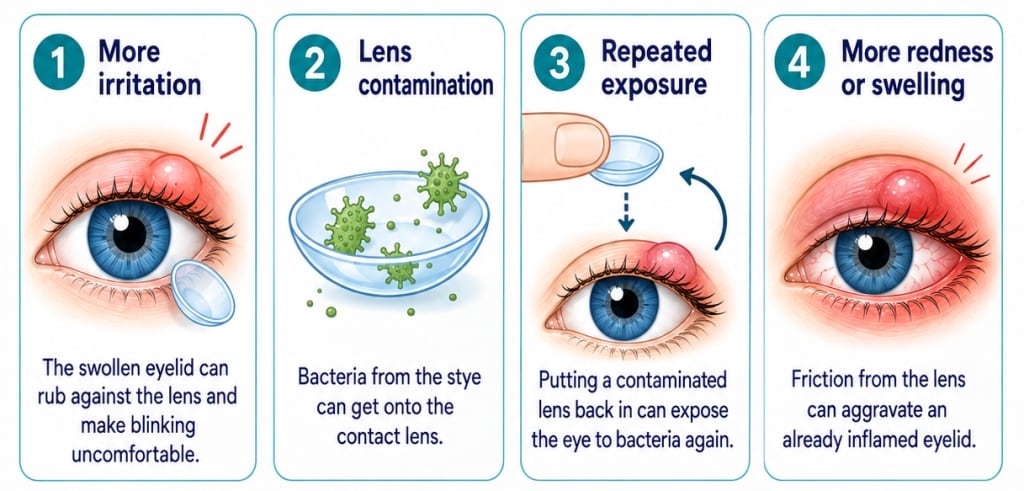
- More irritation and discomfort: A contact lens can rub against swollen or tender eyelid tissue, making blinking uncomfortable.
- Bacterial contamination: Bacteria associated with the stye can get onto your contact lens. Mayo Clinic recommends avoiding contacts until a stye has cleared because lenses can become contaminated with bacteria.
- Continued exposure to bacteria: Putting a contaminated reusable lens back into your eye can expose the eyelid and eye to those bacteria again.
- More redness or swelling: Friction from the lens can aggravate an eyelid that is already inflamed.
The safer choice is to switch to glasses until the stye has healed and your eye feels normal again. Contact your eye doctor if the pain or swelling gets worse, the redness spreads, or you notice changes in your vision.
How Can You Care for a Stye While It Heals?
Most styes clear without medical treatment. A warm compress can ease discomfort and encourage the blocked gland to drain naturally.
Wet a clean washcloth with warm water, wring it out, and hold it gently against your closed eyelid. Mayo Clinic recommends applying the compress for about 5 to 10 minutes two or three times a day.
Good eye hygiene also matters during recovery. Wash your hands before touching your face or eyes, keep the eyelid clean, and avoid eye makeup until the area has healed.
When Can You Wear Contacts Again After a Stye?
Wait until the stye has healed before you wear your contact lenses again. Redness, swelling, tenderness, and discomfort should be gone.
Don’t rush back into contacts simply because the bump looks smaller. Your eyelid should feel comfortable again, including when you blink.
Once you’re ready, wash your hands thoroughly before handling your lenses and follow your normal contact lens care routine. The Centers for Disease Control and Prevention recommends washing and drying your hands before touching contacts, using fresh disinfecting solution for reusable lenses, and replacing your contact lens case at least every three months.
People who wear daily disposables should begin with a fresh pair rather than reusing a lens worn before the stye appeared. For reusable lenses, ask your eye care professional whether your current lenses or case should be replaced.
Can Contact Lenses Cause a Stye?
Contact lenses themselves don’t automatically cause styes. Poor hygiene around the eyes and contact lenses can introduce bacteria to the eyelid and increase the chance of problems.
To protect your eye health, wash your hands before inserting or removing contacts and follow the cleaning and replacement schedule recommended for your lenses. Never use tap water to clean or store contact lenses because water can contain germs that cause serious eye infections.
When Should You See an Eye Doctor for a Stye?
Most styes improve on their own, but an eye doctor should examine your eye when symptoms aren’t getting better or appear to be spreading.
Mayo Clinic recommends contacting a healthcare professional when a stye doesn’t start improving after about 48 hours or when redness and swelling spread across the eyelid, cheek, or other areas of the face.
You should also seek eye care when you develop significant pain, changes in vision, or persistent symptoms. Your eye doctor can determine whether the bump is actually a stye, a chalazion, or another eyelid problem.
Questions People Ask
Can I Wear Contacts for a Few Hours With a Stye?
No. Even wearing contacts for a short period can irritate the swollen eyelid or expose the lens to bacteria. Glasses are the safer choice until the stye has healed.
Should I Throw Away My Contacts After a Stye?
Starting with a fresh pair is sensible for daily disposables. People who use reusable contacts should ask their eye doctor whether the lenses and contact lens case used around the time of the stye need to be replaced.
Can I Put a Warm Compress Over My Contact Lenses?
No. Remove your contact lenses before using a warm compress. Apply the clean, warm washcloth directly over your closed eyelid instead.
Is a Stye the Same as a Chalazion?
No. A stye is generally a painful, infected eyelid bump, while a chalazion forms when an oil gland becomes blocked and is usually less painful.
How Can I Prevent Another Stye While Wearing Contacts?
Practice good eye hygiene, wash your hands before touching your contacts, and follow the recommended cleaning and replacement schedule. Don’t sleep, shower, or swim in contacts unless your eye care professional has specifically instructed otherwise.
Give Your Eyes Time to Heal
A stye can be inconvenient when you depend on contacts every day, but taking a short break from your lenses is better than irritating an already sore eyelid. Wear your glasses until the redness, swelling, and discomfort are gone, then return to contacts with clean hands and fresh lenses.
Once your eye has healed and you’re ready for contacts again, you can shop for contact lenses online from 1-800-GEТ-LENS.
- What Is the Difference Between a Stye and a Chalazion? Causes, Symptoms, Treatment. American Academy of Ophthalmology. https://www.aao.org/eye-health/diseases/what-are-chalazia-styes. Published March 24, 2025. Accessed August 24, 2026.
- About Cleaning, Disinfecting, and Storing Contact Lenses. Centers for Disease Control and Prevention. https://www.cdc.gov/contact-lenses/about/about-cleaning-disinfecting-and-storing-contact-lenses.html. Published May 27, 2025. Accessed August 24, 2026.
- Preventing Eye Infections When Wearing Contacts. Centers for Disease Control and Prevention. https://www.cdc.gov/contact-lenses/prevention/index.html. Published May 27, 2025. Accessed August 24, 2026.
- Stye (Sty) Diagnosis and Treatment. Mayo Clinic. https://www.mayoclinic.org/diseases-conditions/sty/diagnosis-treatment/drc-20378022. Published September 20, 2025. Accessed August 24, 2026.
- Stye (Sty) Symptoms and Causes. Mayo Clinic. https://www.mayoclinic.org/diseases-conditions/sty/symptoms-causes/syc-20378017. Published September 20, 2025. Accessed August 24, 2026.