1-800-GET-LENS /
eyeTopics / How Eyeglass Lenses That Darken In Sunlight Improve Your Vision
How Eyeglass Lenses That Darken In Sunlight Improve Your Vision
Table of Contents
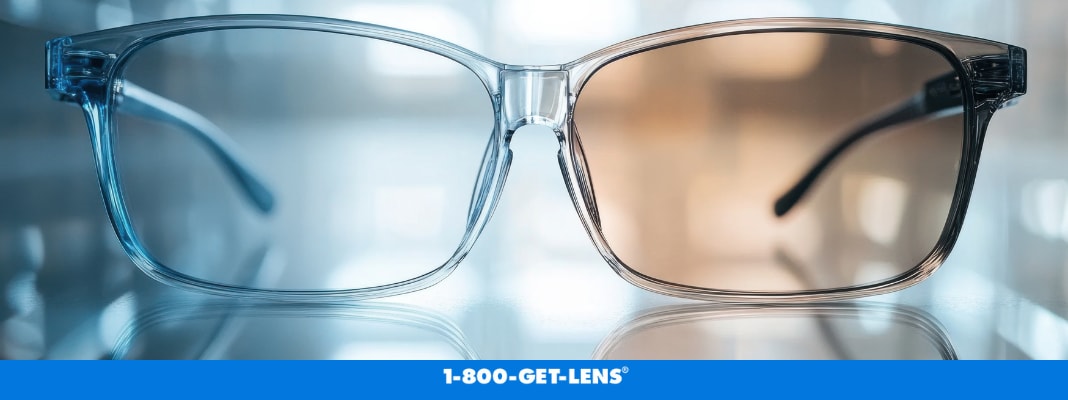
Eyeglasses that adjust their tint based on light exposure represent a noteworthy advancement in vision correction. These lenses, known as photochromic lenses, change from clear indoors to dark outdoors when they encounter ultraviolet rays. This technology delivers a versatile way to manage light sensitivity throughout the day without needing to switch between standard frames and sunglasses. Many people select these lenses for the convenience and constant protection they give in various environments.
The transition process happens automatically and relies on a specific chemical reaction within the lens material. Because these lenses react to the presence of sun, they provide a tailored level of tint that matches the brightness of your surroundings. This results in a more comfortable visual experience and reduces the strain on your eyes during a bright afternoon. Grasping how this technology works helps you decide if these lenses fit your specific lifestyle.
The Science Of Photochromic Technology
Photochromic lenses contain trillions of specialized molecules that change shape when they hit ultraviolet light. This chemical reaction causes the lens to absorb more light and become darker. When you move back indoors and away from ultraviolet rays, the molecules return to their original clear state. This shift happens quickly to verify your vision stays comfortable in changing surroundings.
Temperature plays a significant role in how these molecules behave. Molecules move more slowly in warm weather, which can sometimes result in the lenses not reaching their darkest possible tint on a hot day. Conversely, the lenses frequently become very dark in cold, sunny conditions because the molecules react more efficiently. Manufacturers continue to improve these materials to verify consistent performance regardless of the local climate.
Functional Benefits Of Light Sensitive Lenses
Using lenses that darken in sunlight delivers several advantages for the user. These benefits impact both the convenience of your eyewear and the long term health of your eyes.
Automatic adjustment to changing light conditions for constant comfort
Continuous protection from one hundred percent of UVA and UVB rays
Reduced eye strain and squinting in bright outdoor settings
Savings from not needing to purchase a separate pair of prescription sunglasses
Clear and accurate vision indoors for reading and digital screen use
Versatility for various outdoor activities like walking or gardening
Protection from high energy blue light emitted by the sun and digital devices
Availability in several colors to match your frames and personal style
Note, you should always verify that your lenses include a high quality anti-reflective coating to maximize clarity. Maintaining a clear lens surface is a mandatory part of achieving the best visual results.
Ultraviolet Protection And Eye Health
Blocking harmful ultraviolet rays stays a mandatory requirement for long term ocular health. Lenses that darken in sunlight block all ultraviolet radiation. This protection helps prevent cataracts and other eye conditions related to sun exposure. Using these lenses daily delivers a constant shield for your eyes without any extra effort or a change in your behavior.
Long term exposure to the sun can damage the sensitive tissues around the eyes and lead to vision issues later in life. By wearing photochromic lenses, you verify that your eyes are shielded every time you step outside. This is a significant habit for people who spend a lot of time outdoors or live in areas with high solar intensity. Protecting your eyes from radiation is as necessary as protecting your skin with sunscreen.
Limitations Of Darkening Lenses
While these lenses are highly functional, they have some limitations that you should consider. Most photochromic lenses do not darken inside a vehicle. This happens because car windshields are designed to block ultraviolet rays, which are the trigger for the lens to change color. If you do a lot of driving, you might still need a dedicated pair of polarized sunglasses for the road.
The transition time from dark to clear is another factor to keep in mind. While the lenses darken almost instantly when you go outside, they can take a few minutes to become completely clear once you return indoors. This delay is usually minor but can be noticeable if you move between indoor and outdoor areas frequently. Discussing your daily routine with an eye care professional helps determine if these limitations will impact your satisfaction.
Comparing Standard And Photochromic Lenses
The following table summarizes the functional differences between standard clear lenses and those that adjust to light.
Feature
Standard Clear Lenses
Photochromic Lenses
Indoor Use
Clear vision
Clear vision
Outdoor Use
Remains clear
Darkens automatically
UV Blocking
Variable by material
One hundred percent
Driving Use
Clear vision
Variable darkening
Convenience
Low
High
Selecting The Right Light Sensitive Lenses
Choosing the right pair of photochromic lenses involves several personal preferences. You can select from different base materials like polycarbonate or high index plastics. Each material has different weights and thicknesses to fit your prescription needs. You also have choices regarding the tint color, with gray and brown being the most common selections. Gray gives the most natural color perception, while brown improves contrast in certain lighting conditions.
Your eye care professional can show you samples of how the lenses look when they are fully dark. They can also explain the differences between various brands and technology levels. Some premium lenses are designed to darken slightly even inside a car or in very hot temperatures. Selecting the right option allows you to enjoy the benefits of modern vision technology with total confidence.
Maintaining Your Eyewear For Long Term Use
A healthy vision routine includes taking care of your lenses to prevent scratches and damage. You should clean your photochromic lenses with a specialized lens spray and a microfiber cloth every day. Avoid using household cleaners or paper towels which can ruin the specialized coatings. Replacing your lenses when your prescription changes is a mandatory step for protecting your vision.
Consult your doctor to see if your lifestyle is a functional match for light sensitive lenses. They can provide advice on which brands deliver the best performance for your hobbies and work environment. Using these lenses allows you to enjoy the convenience of a single pair of glasses for all your daily activities. With the right care and technology, you can maintain excellent vision and comfortable eyes in every environment.
References
FDA. Eyeglass Lenses and UV Protection (fda.gov). 2024. American Optometric Association. Photochromic Lenses for Vision (aoa.org). 2025. CDC. Protecting Your Eyes from the Sun (cdc.gov). 2025. American Academy of Ophthalmology. How Photochromic Lenses Work (aao.org). 2024. Mayo Clinic. Choosing Eyewear for Eye Health (mayoclinic.org). 2025.