Table of Contents
Eyeglasses are precision devices designed to correct vision and provide comfort. Each component has a role in how the glasses fit, how long they last, and how well they work. Knowing the structure of your glasses helps you accurately describe problems to an optician, evaluate quality, and understand maintenance.
Understanding these details can protect your vision and extend the life of your eyewear.
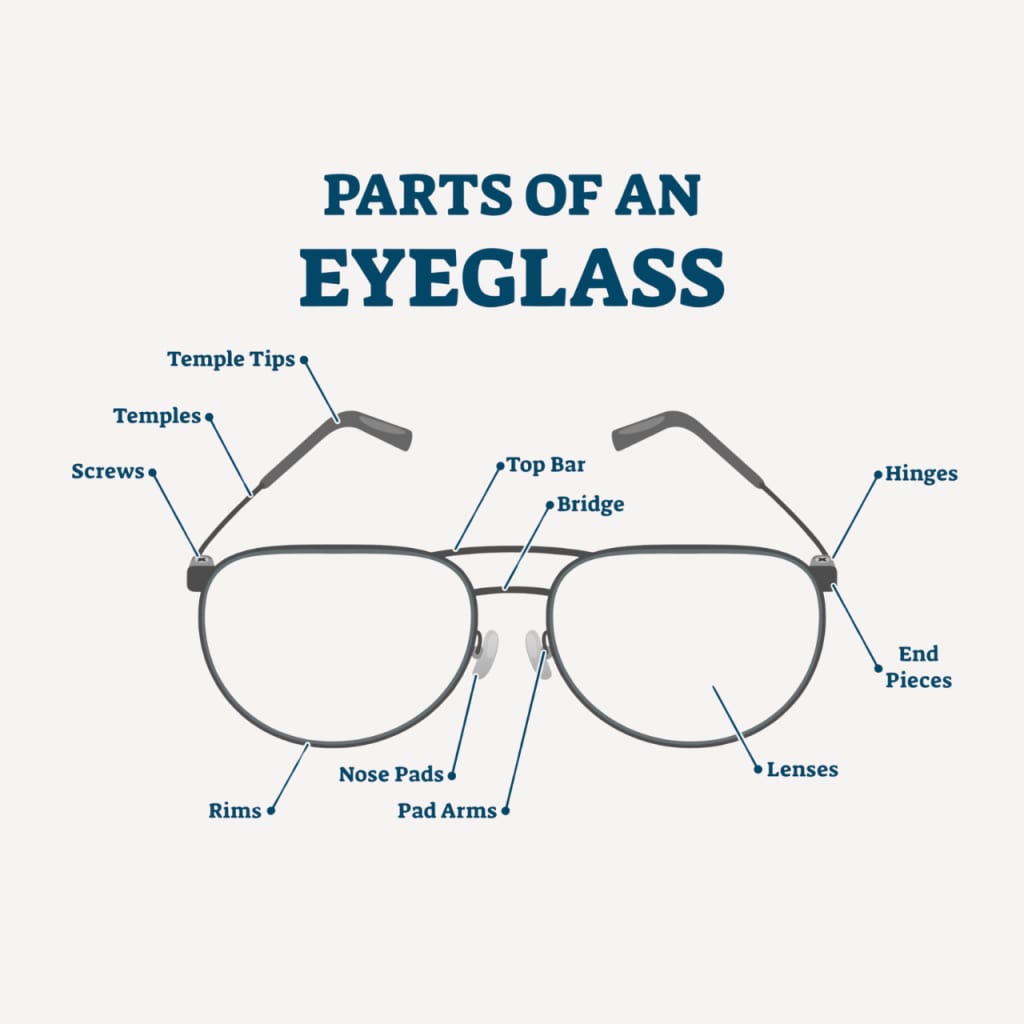
The Parts of Eyeglasses
Eyeglasses are composed of several pieces working in harmony. Knowing the proper name for each part helps when you need a repair or adjustment.
The Frame Front
The front section holds the lenses and rests on your nose.
- Rims (Eye Wires) – These hold the lenses in place and give the frame its shape.
- Bridge – This piece sits between the two lenses and rests on your nose. Its width helps determine the fit and comfort of the frame.
- Nose Pads – These soft pads sit on your nose to distribute the weight of the glasses and prevent slipping.
- Pad Arms – These small arms connect the nose pads to the frame. They allow for adjustment of the pad position.
- End Pieces – These small extensions at the outer corners connect the rims to the temples.
The Temple and Hinge
The side section secures the glasses to your head.
- Temples (Arms) – These long pieces extend back to go over or behind your ears, holding the glasses in place. They often include temple tips or ear pieces for comfort behind the ears.
- Hinges – These joints allow the temples to fold inward and open smoothly.
- Screws – These fasteners secure the hinges and sometimes the nose pads.
What Are Eyeglass Frames Made Of?
Eyeglass frames come in many materials, each with unique properties. Your choice affects everything from durability to weight and allergy considerations.
The American Academy of Ophthalmology notes that modern frames are made from many plastics and metals.
Comparing Frame Materials
| Material | Key Properties | Common Use |
|---|---|---|
| Titanium | Very strong, lightweight, and corrosion-resistant; hypoallergenic. | Everyday, durable wear. |
| Monel (Metal Alloy) | Flexible and corrosion-resistant. | General-purpose, coated to prevent allergic reactions. |
| Stainless Steel | Lightweight, strong, and more affordable than titanium. | General use and style frames. |
| Flexon (Memory Metal) | Bends and returns to its original shape; lightweight. | Sports and active lifestyles. |
| Acetate (Plastic) | Plant-based plastic with rich, layered colors and patterns; hypoallergenic. | Fashion and thicker frames. |
| Zyl (Plastic) | Inexpensive, lightweight, and easy to adjust. | Basic frames and quick replacements. |
| Blended Nylon | Strong and lightweight. | Sports and wraparound styles. |
Understanding Eyeglass Lens Materials
Lenses affect weight, thickness, impact resistance, and price. When choosing lens materials, consider weight, resistance to impact, scratch resistance, and thickness.
| Lens Material | Best For | Properties |
|---|---|---|
| Plastic (CR-39) | General, light prescriptions. | Affordable, good clarity, but thickest for strong prescriptions. |
| Polycarbonate | Active users and children. | Excellent impact resistance, thin, lightweight, and has built-in UV protection. |
| High-Index Plastic | Strong prescriptions. | Bends light more efficiently, making lenses thinner and lighter. |
| Trivex | Safety and sports. | Very lightweight, highly impact-resistant, and blocks 100% of UV rays. |
| Crown Glass | Best clarity. | Excellent scratch resistance and clarity, but heavy and can shatter. |
Caring for Your Eyeglasses
Proper maintenance can extend the life of your eyewear. Regular upkeep prevents common issues such as loose screws or premature wear.
Daily Maintenance
Handle glasses only by the bridge to avoid putting stress on the temples. Keep glasses in a hard case when not in use. Avoid high temperatures, as heat can warp frames. When removing your glasses, grasp both sides to maintain the frame’s shape.
Cleaning Technique
Proper cleaning maintains clarity and protects lens coatings. Start by rinsing your glasses with clean water to remove particles that could scratch lenses. Use an approved lens cleaner. Avoid household cleaners, which may damage coatings. Gently clean the lenses, frames, and nose pads with clean fingers and a microfiber cloth. Wipe until lenses are dry. Never use shirt tails, paper towels, or tissues, which can scratch lenses.
Repairing Eyeglass Parts
When glasses break, you must evaluate the damage to determine if a quick fix is possible or if professional help is required.
Many simple repairs can be done at home. These include tightening hinges and screws with a repair kit. Worn or damaged nose pads and temple tips can also be swapped out easily.
Certain issues should be left to professionals. Do not attempt to glue or solder broken metal or acetate frames yourself. Deep scratches or cracked lenses usually require replacement. Severely bent or warped frames should be adjusted by an optician. Simple habits go a long way toward preserving your eyewear.
Final Thoughts
Eyeglasses are a mix of engineering and style. The parts, from rims and bridges to hinges and temples, work together to deliver clear vision. Choosing the right frame material and lens material affects the weight, durability, and cost of your glasses. Understanding the structure of your glasses better prepares you to care for them and make informed decisions when shopping for your next pair.
Related Articles
-
Best Office Sunglasses For Women: Bringing Trends to Your Workplace
-
What To Do When You Run Out of Contact Lens Solution
-
What the Astigmatism Severity Scale Tells You About Your Vision
-
How To Wear Colored Contact Lenses Safely For St. Patrick’s Day
-
How To Use SPF Eye Cream Without It Affecting Your Contact Lenses