How Hot and Cold Weather Affects Your Contact Lenses
Table of Contents
You ordered a fresh box of contacts. It sat on your porch all afternoon in the heat or overnight in freezing temperatures. They are almost certainly fine. But weather does affect how your contacts feel on your eyes, and knowing what to watch for can prevent a lot of discomfort.
Can Contact Lenses Freeze or Melt?
Two of the most common worries contact wearers have are whether their lenses will melt in the heat or freeze in the cold. Neither happens while you are wearing them.
Your contacts sit on the cornea, which stays at around 34 to 35 degrees Celsius regardless of outside conditions. That warmth prevents freezing even in sub-zero temperatures. The same applies to heat. Your contacts will not melt on your eyes, in your car, or on a hot porch.
Stored contacts are a different story. Lenses kept in solution can freeze when temperatures drop to around 5 degrees Fahrenheit. Let them thaw naturally at room temperature. Do not use hot water or a heat source, as that can warp the lens shape. Once thawed, inspect the lenses and discard the old solution. If anything looks off, throw them out.
A 2019 CooperVision study tested lenses at temperature extremes for 72 hours and found they maintained approved parameters, including base curve, diameter, water content, and power, as long as the packaging stayed intact.
Hot vs. Cold Weather and What Changes for Contact Lens Wearers
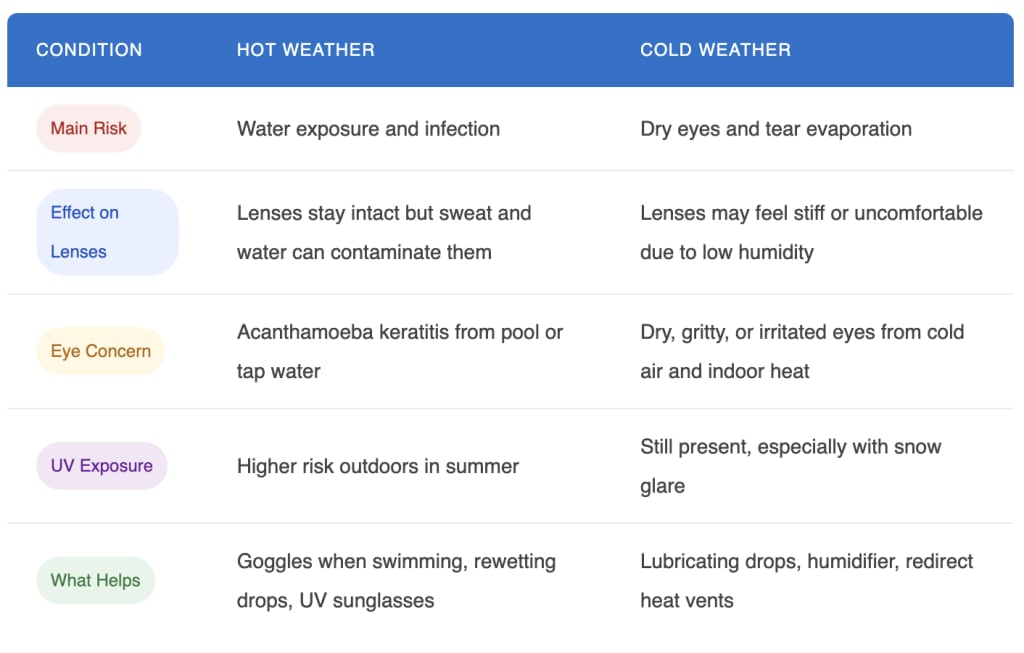
Both seasons affect your lenses and eyes differently. Here is a side-by-side look at the main concerns and how to handle them.
Wearing Contact Lenses in Hot Weather
Heat itself will not damage your lenses, but summer conditions create real risks worth knowing.
Stay out of the water. Remove your contacts before swimming in a pool, ocean, or hot tub. Even tap water can carry microorganisms that stick to contact lens surfaces. One serious risk is acanthamoeba keratitis, a rare but severe eye infection that can cause permanent vision damage if untreated. If you must swim with contacts, wear tight-fitting goggles.
Watch out for sweat. Sweat trapped between the lens and cornea can cause irritation, redness, and infection. Keep rewetting drops nearby during outdoor exercise and wash your hands before touching your eyes.
Protect against UV. Sunglasses with UV protection are the strongest barrier for your eyes. Some contact lenses also come with UV-blocking properties, though they do not cover the full eye the way sunglasses do. Ask your eye care provider which option fits your prescription.
Contact Lenses That Hold Up in Any Weather
If dryness is a recurring problem, the lens itself could be part of it. These options are worth discussing with your eye care provider.
Acuvue Oasys uses HydraLuxe technology to support a stable tear film. Dailies Total1 by Alcon features a water gradient design with nearly 100% water content at the lens surface. Bausch and Lomb Ultra retains moisture for up to 16 hours with MoistureSeal technology. Biofinity by CooperVision uses Aquaform technology to lock in water naturally. Air Optix Aqua allows more oxygen through the lens, reducing end-of-day dryness.
How To Keep Your Contacts Comfortable All Year
These habits go a long way regardless of the season.
Clean and store your lenses properly every day. Follow the replacement schedule on your prescription.
Switch to daily disposables if your current lenses feel uncomfortable. They start fresh each day and reduce buildup.
Wear glasses for a few hours in the evening to let your eyes breathe.
Avoid sleeping in your contacts unless your prescription allows it.
If symptoms persist, see your eye doctor. Persistent dryness, redness, or blurred vision can point to fitting issues or an underlying condition that drops and lens swaps will not fix.
References
CooperVision. Impacts of Extreme Environmental Conditions on Contact Lenses. CooperVision Practitioner. 2019.
Stapleton F, et al. CLEAR – Contact Lens Complications. Contact Lens and Anterior Eye. 2021.
Willcox MDP, et al. TFOS DEWS II Tear Film Report. The Ocular Surface. 2017.
American Academy of Ophthalmology. Contact Lens-Related Eye Infections. AAO.org. 2023.