What Are Preservative-Free Eye Drops and Do You Need Them?
Table of Contents
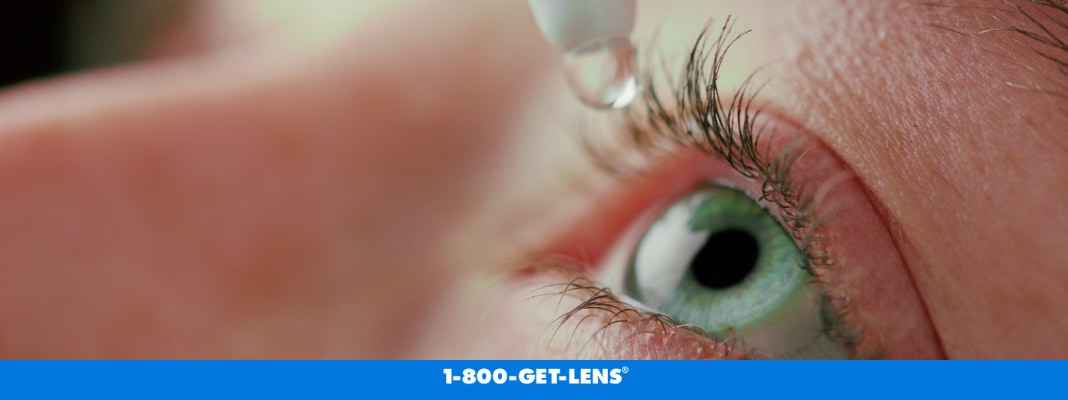
Eye drops come in two forms. Most bottles on store shelves contain preservatives. A smaller but growing category does not. For occasional users, the difference rarely matters. For people who reach for drops several times a day, it can matter quite a bit.
The preservative question is not about which product is cleaner or more natural. It comes down to how your eyes handle repeated chemical exposure over time, and whether removing that variable changes how you feel.
What Do Preservatives in Eye Drops Do?
Multi-dose eye drop bottles need a way to stay sterile after the cap comes off. Every time you squeeze the bottle, a small amount of air enters. Preservatives prevent bacteria from growing inside the solution during that process.
The most widely used preservative is benzalkonium chloride, or BAK. It does its job well as an antimicrobial agent, but it comes with a trade-off. BAK acts as a detergent on the lipid layer of the tear film, the outer layer that slows evaporation. Over time and with repeated exposure, this disruption can increase tear evaporation and worsen dryness rather than relieve it.
Some manufacturers use gentler alternatives. Polyquaternium-1 and oxidizing preservatives that break down on contact with the eye tend to cause less surface disruption than BAK. These are worth checking for on the label if you prefer a preserved drop but want to reduce irritation risk.
When Do Preservative-Free Eye Drops Make a Difference?
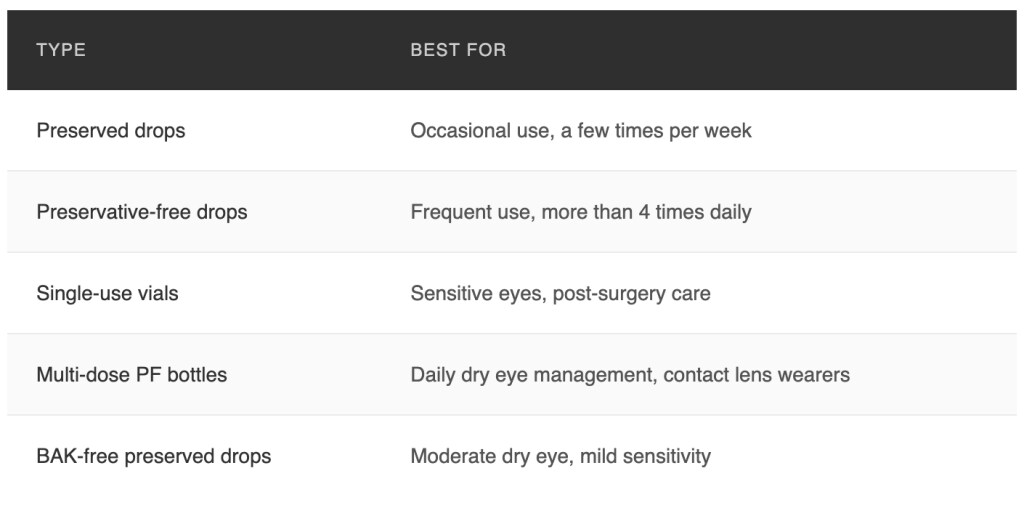
The threshold most eye care professionals point to is four times daily. Using drops less frequently than that, a preserved formula is generally well tolerated for most people. Cross that line into multiple daily applications and preservative buildup on the ocular surface becomes a real consideration.
People who tend to see the most benefit from switching to preservative-free drops include:
Contact lens wearers, since preservatives can interact with lens materials
People with moderate to severe dry eye who need drops throughout the day
Anyone recovering from LASIK, cataract surgery, or other eye procedures
People using multiple preserved eye medications at the same time, such as glaucoma drops
Anyone who notices their eyes feel worse, not better, after using drops
Clinical research supports this. A multicenter observational study found that 97% of dry eye patients who switched from preserved to preservative-free artificial tears showed measurable symptom improvement, with scores dropping significantly in just three weeks of daily use.
Preserved vs Preservative-Free at a Glance
Do Preservative-Free Eye Drops Actually Work Better?
Not always in measurable terms. A systematic review and meta-analysis found no statistically significant difference in clinical outcomes between preserved and preservative-free artificial tears. However, the same research noted that people consistently report feeling better on preservative-free formulas. That subjective difference is meaningful for anyone using drops as part of a daily routine.
What Are the Trade-Offs?
Preservative-free drops are not the right fit in every situation. A few things to consider before switching.
Single-use vials produce more plastic waste and cost more per dose than a standard bottle. Once opened, the vial needs to be used immediately and discarded. Multi-dose preservative-free bottles are more economical but come with a post-opening expiration window that varies by product. For anyone using drops once or twice a week, the extra cost rarely translates into a noticeable benefit.
How Do You Know If You Need Preservative-Free Eye Drops?
Start with how often you use drops. If it is a few times a week during allergy season or after long screen sessions, your current drops are likely fine. If you are reaching for them four or more times a day, or if your eyes feel irritated rather than relieved after applying them, preservative-free is worth trying.
Your eye doctor can give a clearer recommendation based on your prescription history, lens type, and the specific symptoms you are dealing with.
References
Carracedo G, et al. The Use of Preservatives in Dry Eye Drops. Clinical Ophthalmology. PMC. 2019.
Chiambaretta F, et al. Real-life Results of Switching from Preserved to Preservative-Free Artificial Tears in Patients with Dry Eye Disease. PMC. 2018.
Ribeiro MVMR, et al. Effectiveness of Preservative-Free versus Preserved Lubricants for Dry Eyes: A Systematic Review. Arquivos Brasileiros de Oftalmologia. 2019.
American Academy of Ophthalmology. Choosing the Best Lubricant Eye Drops for Dry Eyes. AAO.org. 2025.