Table of Contents
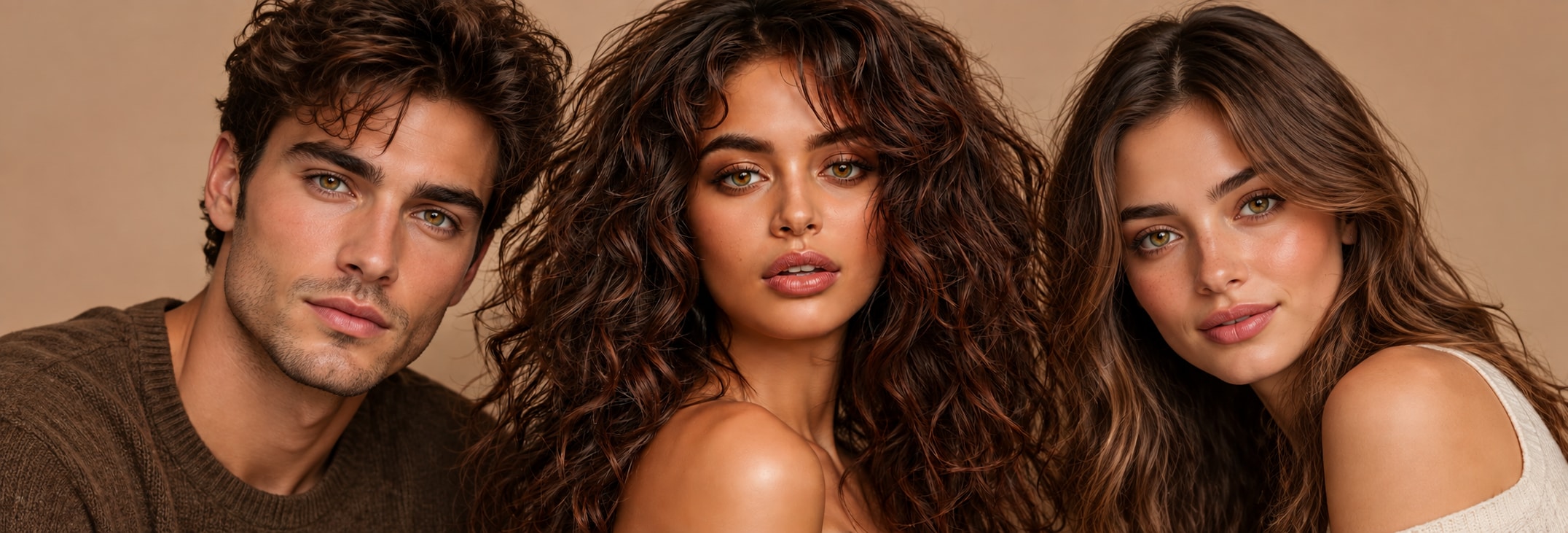
For some, hazel and green eyes look similar. One photo may reflect the latter, while warmer lighting can make golden or brown tints appear.
So, how do you know if you have green or hazel eyes?
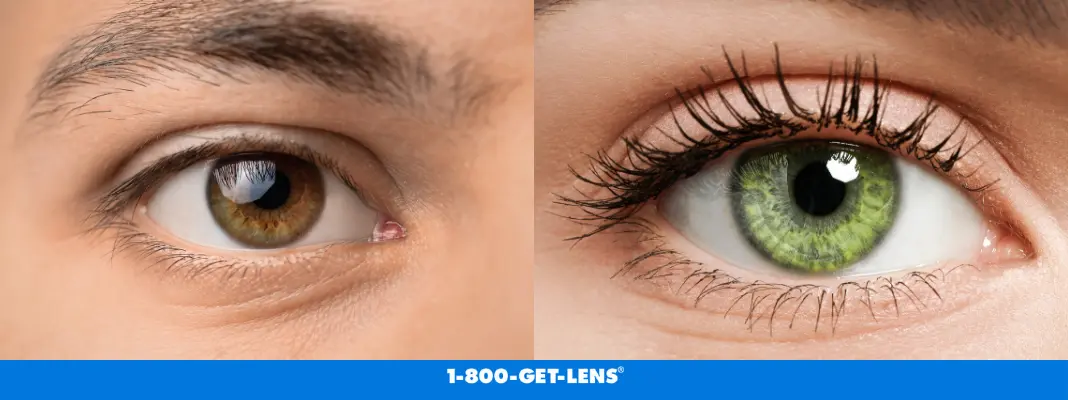
An easy way to tell is by looking at the colors that appear throughout your iris. Green eyes are predominantly green, but exact shades vary. Hazel eyes usually have a more noticeable combination of gold, green, and brown.
There’s more to the hazel vs. green eyes comparison than just color. Other things can affect how your eyes look.
What Do Hazel Eyes Look Like?
Hazel eyes are known for having a few noticeable colors within the iris. They feature a gold, green, and brown combination, but the exact mixture varies from person to person.
According to the Cleveland Clinic, the combination isn’t an equal mixture of the three colors. For example, someone’s iris may be mostly green, with a golden-brown ring near the pupil. Variations like this make it hard to identify hazel eyes at a glance.
This shade also seems to change color, depending on the environment. No, the actual pigmentation isn’t changing. Instead, lighting and nearby colors highlight the different tones already in your iris.
What Do Green Eyes Look Like?
Green eyes are typically dominated by green rather than a green-and-brown mixture. But like hazel eyes, they aren’t perfect, uniform shades. Green irises can vary in pattern and tone. Some people may notice gold, gray, or other colored hints.
Eye color is partly influenced by melanin in the iris and by how light interacts with its structure. Green- and hazel-eyed people generally have less melanin in their irises’ front layers compared to brown-eyed folks.
Research shows that eye color is more genetically complex than it appears. The old idea that a single brown-eye or blue-eye gene determines everything. A genome-wide study found numerous genetic regions associated with human eye color variation.
What Is the Difference Between Green and Hazel Eyes?
The combination and distribution of colors within the iris is the biggest difference between the two eye colors. Let’s find out where else they differ.
|
At a glance
Eye color falls on a continuum, and experts don't always draw the line between hazel and green in the same place. |
The distinction isn’t always absolute. Human eye color falls along a continuum, and experts don’t always use the same systems to categorize it.
What does this mean? An eye that’s somewhere in between hazel and green can have a different label, depending on who’s looking at it.
Why Do Green and Hazel and Green Eyes Look Different in Different Lighting?
Say you’re looking at your eyes beside a sunny window. If you’ve ever wondered if your eyes were always that green, you’re not imagining that different look.
Light also affects the perception of iris color. Eye color doesn’t just depend on pigmentation; the way light is absorbed and scattered within the iris also affects it. Bright, natural light can make iris patterns and lighter shades easier to spot. Warm indoor lighting can also emphasize brown or golden tones.
Surroundings also play a part. Clothes, hair color, makeup, and even photo backgrounds can create contrast. This makes certain shades stand out more strongly than usual. This effect is especially noticeable with hazel eyes. Why? Several colors may already be visible in the iris.
Are Hazel Eyes Brown or Green?
This color is generally recognized as its own separate category. But some individual hazel eyes can lean more strongly in a specific direction.
Some look primarily green, especially from a distance. Others have significant gold or brown pigmentation, so they may initially look light brown. If “kind of green” was always your descriptor, hazel may explain your unusual answer.
Which Is Rarer?
|
Estimated share of the global population
Green eyes2%
Hazel eyes5%
Brown eyes70–80%
Broad global estimates — prevalence varies by region and population. Source: World Population Review. |
How Can You Tell If Your Eyes Are Hazel or Green?
Can’t tell yet? Try looking at your eyes in indirect natural daylight and focus on the entire iris. Don’t rely on whatever color catches your initial attention.
Answer these questions:
- Is your iris largely green?
- Is there a significant amount of gold or brown?
- Is there a different color that stands out around the pupil?
- Do your eyes look obviously multicolored up close?
- Do they often appear green in one setting but golden or brown in another?
If your iris is overwhelmingly green, then that may be the more accurate description. But if that green is mixed with gold and brown (especially across different parts of the iris), hazel may be the correct answer.
Can You Make Hazel Eyes Look Greener?
Since there’s some green in your eyes, you can make it more prominent through contrasting elements.
Some choices (makeup, clothes, and surrounding colors) can draw out greener tones. Lighting can also emphasize them. It’s why an eye may photograph differently in indoor and outdoor settings.
If you want a more noticeable change, you can use color disposable contacts or cosmetic contact lenses. Colored lenses come in different shades and effects. Some are even built to interact with your iris’s natural color.
Don’t forget that they aren’t mere cosmetic accessories. Contact lenses are medical devices, including the ones that change your appearance. Your pair should be properly fitted and used per your eye care professional’s instructions.
Hazel and Green Eyes Are More Different Than They First Appear
When you’re making a hazel vs. green eyes comparison, the mixture of colors is your biggest clue. Do note, though, that both aren’t completely uniform. Human iris color exists in a wide spectrum.
So, take your pick: green or hazel? Take a look at your eyes in natural light. Tiny gold flecks may be hiding the answer you’re looking for.
Learn More About Hazel vs. Green Eyes
Can green eyes have gold or brown around the pupil?
Yes. Green eyes can have small golden or brown flecks without being tagged as hazel. But if a distinctly different color forms a ring around the pupil, you may have an iris pattern called central heterochromia rather than another green variation.
What differentiates hazel eyes from central heterochromia?
The former is a mix of gold, brown, and green tones blending across the iris. The latter refers to a different color forming a more noticeable inner ring around the pupil. As this happens, the rest of the iris has another color.
Can hazel or green eyes change color with age?
Eye color can change during childhood. Why? Pigmentation develops. This change can continue for more years. For adults, surroundings and lighting can make the eyes appear different without pigmentation changes.
Disclaimer: The content on this page is for informational purposes only and should not take the place of professional medical advice, diagnosis, or treatment.
References
Cleveland Clinic. Eye Colors: Hazel, Green, Amber, Blue, Grey & Brown. Cleveland Clinic. https://my.clevelandclinic.org/health/articles/21576-eye-colors. Last Updated: March 11, 2024. Date Accessed: September 23, 2026.
Is Eye Color Determined by Genetics? MedlinePlus Genetics, U.S. National Library of Medicine. https://medlineplus.gov/genetics/understanding/traits/. Publication Date: Not Listed. Date Accessed: September 23, 2026.
Eye Color. All About Vision. https://www.allaboutvision.com/eye-care/eye-anatomy/eye-color/. Publication Date: Not Listed. Date Accessed: September 23, 2026.
What Color Are Hazel Eyes? Warby Parker. https://www.warbyparker.com/learn/hazel-eyes. Updated: April 2, 2026. Date Accessed: September 23, 2026.
Genetics of Human Iris Colour and Patterns. Sturm, R. A., & Larsson, M. Pigment Cell & Melanoma Research. https://pubmed.ncbi.nlm.nih.gov/19619260/. Publication Date: October 2009. Date Accessed: September 23, 2026.
Eye Color Percentage by Country. World Population Review. https://worldpopulationreview.com/country-rankings/eye-color-percentage-by-country. Date Accessed: September 23, 2026.