Why Is One Contact Lens Blurry and What Can You Do About It?
Table of Contents
Blurry vision in only one contact lens can be frustrating when the other eye sees clearly. The cause can be simple, such as an inside-out contact lens, dryness, or contact lens deposits, though prescription changes, lens fit, or eye health can also play a role.
When you ask, “Why are my contacts blurry?” notice whether the blur clears after removing or replacing the lens. Persistent blurry vision with contacts, especially in one eye, is a reason to stop wearing the lens and speak with an eye care professional.
6 Common Causes Why One Contact Lens Is Blurry
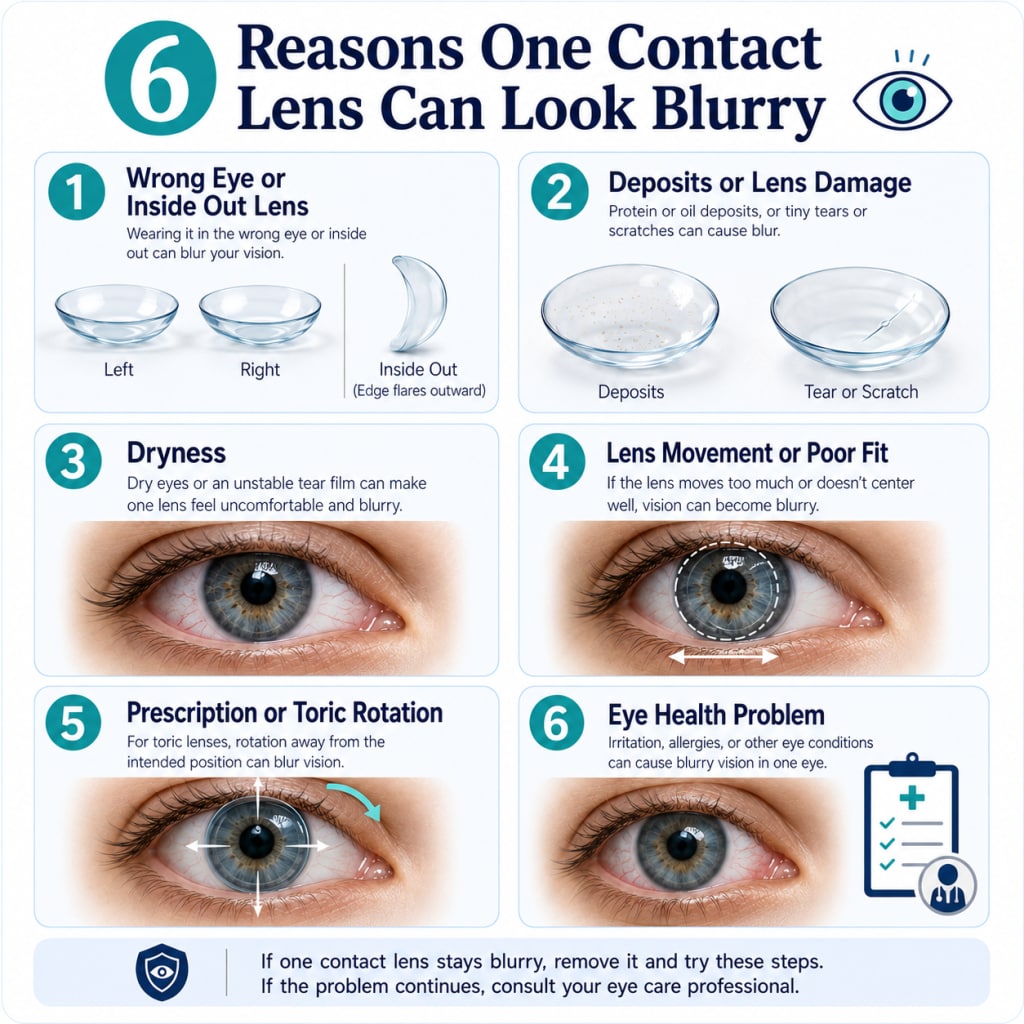
Your Contact Lens Is in the Wrong Eye or Inside Out
Right and left contacts can have different prescriptions, so switching them can leave one eye blurry with contacts. An inside-out contact lens can also sit incorrectly and cause blur, extra movement, or irritation. Check the lens shape and confirm that each lens goes into the correct eye before reinsertion.
Your Contact Lens Is Dirty, Damaged, or Has Deposits
Protein deposits, skin oils, makeup, and debris can collect on reusable lenses and interfere with clear vision. A torn or scratched lens can distort vision and irritate the eye. Clean reusable lenses with fresh lens care solution made for contacts, and discard any lens that is damaged.
Your Contact Lens or Eye Is Dry
Dry eye can make the tear film over a contact lens unstable, leading to blurry vision that changes after blinking. One eye can be drier than the other, so both lenses are not necessarily affected the same way. Contact lens compatible rewetting drops can help with mild dryness, while repeated symptoms deserve an eye exam.
Your Contact Lens Has Shifted or Does Not Fit Properly
A lens that moves too much, sits off center, or does not match the shape of your eye can blur vision. Poor fit can also make the lens shift with each blink. Repeated movement should be checked by an eye care professional.
Your Prescription Has Changed or Your Toric Lens Is Rotating
Outdated prescriptions can leave one eye less clear, especially when each eye needs a different correction. For people who wearcontact lenses for astigmatism, a toric lens can look blurry when it rotates away from its intended position. An eye exam can show whether the issue comes from the prescription, lens fit, or lens design.
An Eye Health Problem Is Affecting One Eye
The lens itself is not the only possible source of blurred vision. Dry eye, corneal irritation, abrasions, inflammation, and eye infection can affect one eye and lead to blurry vision with contact lenses. Pain, redness, light sensitivity, unusual tearing, or discharge need prompt attention.
How Do You Fix a Blurry Contact Lens in One Eye?
Start with a quick lens check before trying another pair.
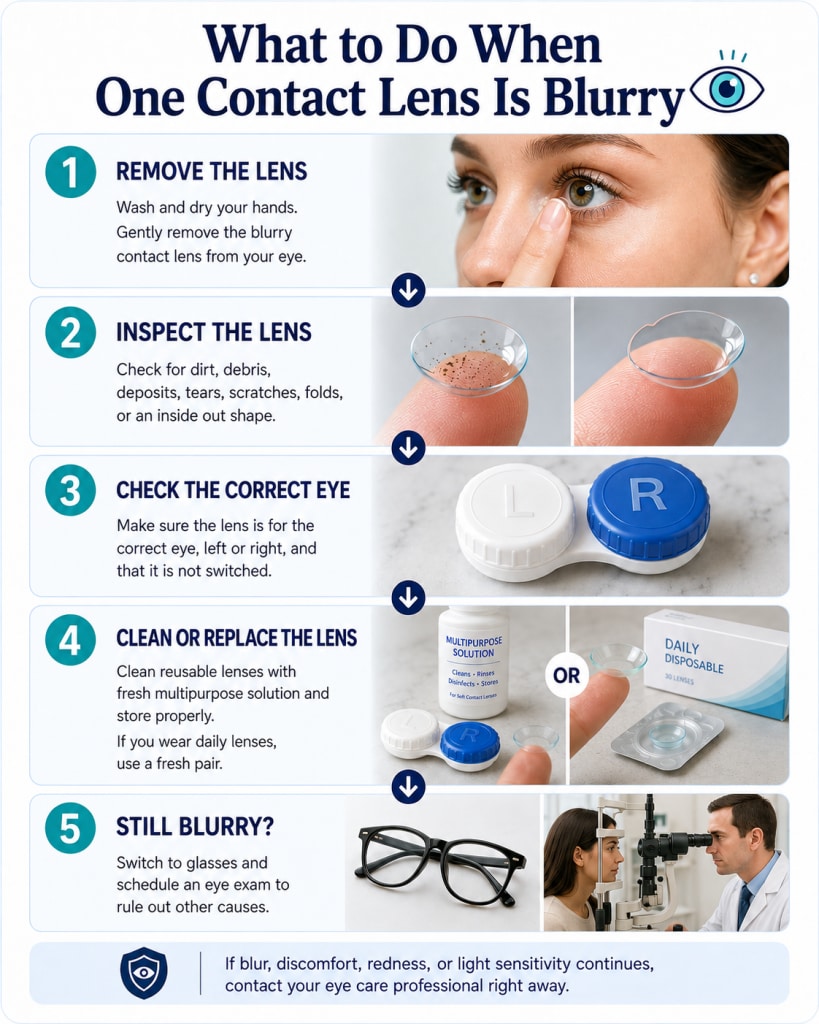
Wash and dry your hands, then remove the blurry lens.
Inspect it for dirt, tears, scratches, folding, or an inside-out shape.
Clean and disinfect a reusable lens according to its care instructions using fresh contact lens solution and no water.
Confirm that the lens belongs to the correct eye and is facing the right way.
Wearers ofone-day contact lenses should replace the blurry lens with a fresh one rather than clean and reuse it.
For dryness, use rewetting drops labeled for contact lens wear or recommended by your eye care professional.
Switch to glasses and arrange an eye exam when a fresh, correctly positioned lens does not clear the blur.
When Should You Remove a Blurry Contact Lens and See an Eye Doctor?
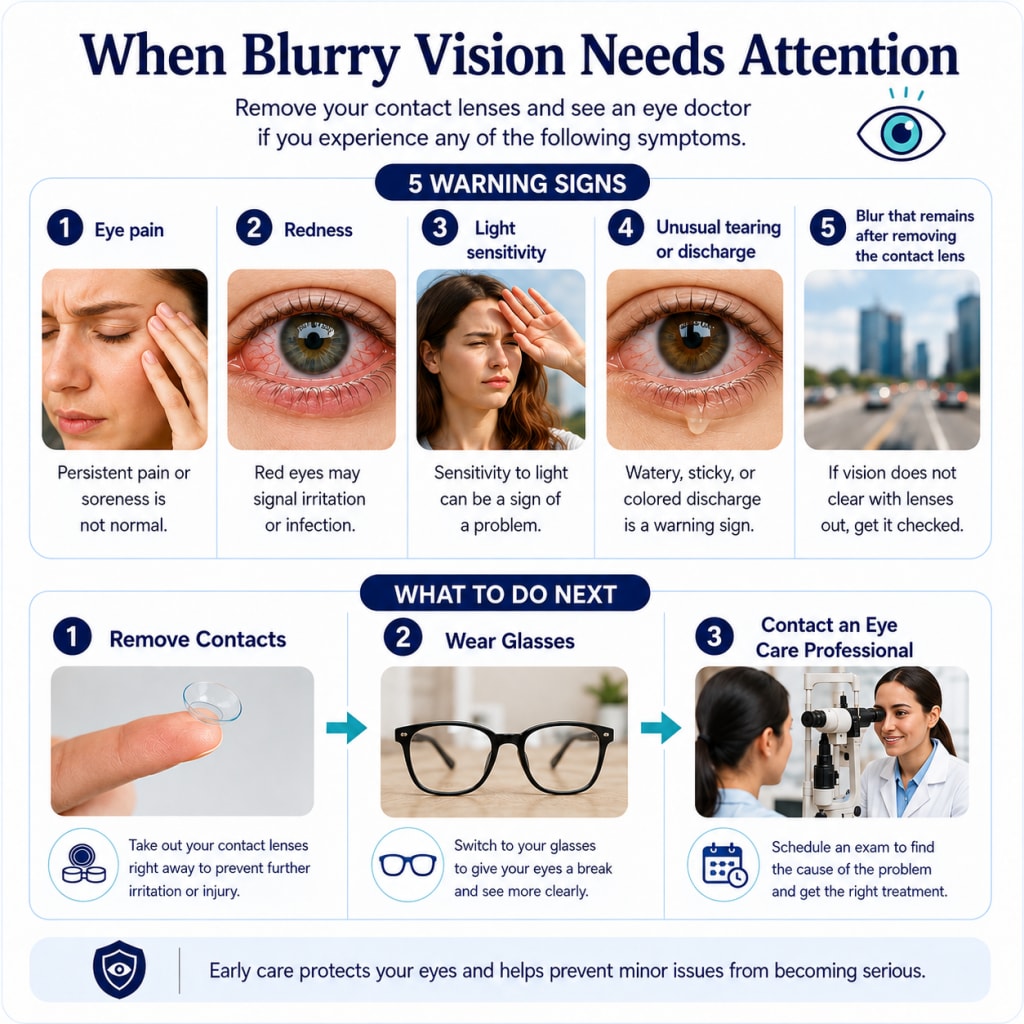
Remove the lens and contact an eye care professional when blurry vision is sudden, persistent, or paired with any of these symptoms.
Eye pain
Noticeable redness
Light sensitivity
Unusual tearing or discharge
Blur that remains after the lens is removed or replaced
These symptoms can occur with corneal irritation, abrasions, inflammation, or contact lens-related eye infections such as keratitis.
How Can You Prevent One Contact Lens From Becoming Blurry?
Follow your prescribed replacement schedule and the care instructions for your lenses. Wash and dry your hands before handling contacts, and use fresh contact lens solution each time reusable lenses are cleaned or stored. Keep lenses away from tap water, bottled water, pools, and showers.
Wearers of 2-week contact lenses should replace them according to their prescribed schedule rather than extend their use. When your eyes have different prescriptions, keep the right and left lenses separate and replace any lens that becomes torn or scratched. Regular eye exams also help keep your prescription, contact lens fit, dryness, and overall eye health under review.
FAQs About Blurry Contact Lenses
Is It Normal for Contacts to Be Blurry at First?
Some temporary blur can happen while your eyes adjust to a new prescription or lens type. Blur that stays in one eye, returns repeatedly, or comes with discomfort should be checked by an eye care professional.
Why Does My Contact Lens Get Blurry Every Time I Blink?
Blur that changes after blinking can come from lens movement or an unstable tear film. A toric lens can also rotate after a blink, so repeated post-blink blur deserves a contact lens fit check.
Can Dry Eyes Make Only One Contact Lens Blurry?
Yes. Dryness can affect each eye differently, leaving one contact lens less clear than the other. Repeated dryness, burning, or discomfort is worth discussing during an eye exam.
Why Is One Contact Blurry but My Glasses Are Clear?
Clear vision with glasses but blurry vision with one contact can point to a dirty, damaged, poorly fitting, incorrectly inserted, or wrong-eye lens. When a fresh lens does not restore clear vision, have the prescription and contact lens fit checked by an eye care professional.
Disclaimer: This article is provided for general information only and should not be used in place of professional advice, diagnosis, or treatment.
References
About Cleaning, Disinfecting, and Storing Contact Lenses. https://www.cdc.gov/contact-lenses/about/about-cleaning-disinfecting-and-storing-contact-lenses.html. Accessed August 24, 2026.
Blurriness with Contact Lenses. https://www.1800contacts.com/eyesociety/why-is-my-vision-blurry-with-my-contact-lenses. Accessed August 24, 2026.
Contact Lens Care. https://www.fda.gov/consumers/womens-health-topics/contact-lens-care. Accessed August 24, 2026.
Contact Lens Risks. https://www.fda.gov/medical-devices/contact-lenses/contact-lens-risks. Accessed August 24, 2026.
Healthy Habits: Keeping Water Away from Contact Lenses. https://www.cdc.gov/contact-lenses/about/healthy-habits-keeping-water-away-from-contact-lenses.html. Accessed August 24, 2026.
Why Are My Contacts Blurry? https://www.warbyparker.com/learn/why-are-my-contacts-blurry. Accessed August 24, 2026.
Why Do Contacts Get Blurry and How to Fix Them. https://www.contactsdirect.com/how-fix-blurry-contacts. Accessed August 24, 2026.
Why Does My Vision Get Blurry While Wearing Contact Lenses? https://www.acuvue.com/en-us/eye-health/blurry-contacts/. Accessed August 24, 2026.