If you have started holding your phone farther away to read a text, or night driving feels harder than it used to, you are not imagining it. Eyes change with age, both in how they look and how they work, and knowing what is normal helps you catch what is not.
This guide covers the usual signs of aging around the eyes, which vision changes are typical, and which symptoms mean it is time to call an eye doctor.
The Skin Around Your Eyes Shows Signs of Age First
The skin around your eyes is thin and moves constantly from blinking, squinting, and smiling, so it tends to show age before the rest of your face.
Crow’s feet, fine lines from years of expression
Under-eye bags, caused by weakening tissue that lets fat shift forward
Dark circles, from thinning skin and more visible blood vessels
Hooded or drooping eyelids, from lost skin elasticity
Volume loss, giving the area a more hollow look
Sun exposure speeds up most of these changes, so daily sunscreen and UV-blocking sunglasses are some of the most useful habits for slowing them down.
Most Vision Changes After 40 Are a Normal Part of Aging
Not every change signals disease. Dry eyes become more common as tear production slows, especially after menopause, and preservative-free artificial tears usually help. Night driving can get harder as pupils shrink and adjust to darkness more slowly, and anti-reflective lens coatings can ease glare. Your eyes can also take longer to adjust between bright and dim rooms.
Floaters, small specks drifting across your vision, are common as the gel inside the eye changes with age. Colors can look less vibrant too, as the lens yellows slightly over time. A sudden surge in floaters, flashes of light, or a curtain across your vision is different and needs same-day attention.
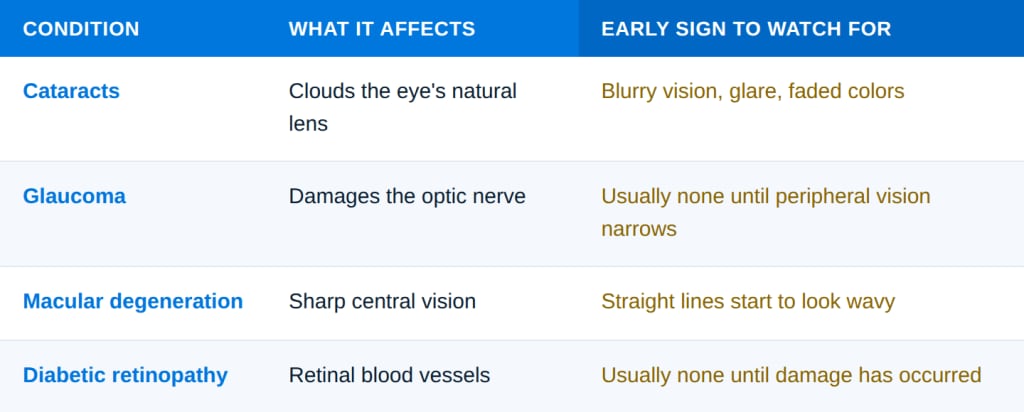
Four Eye Diseases Become More Common With Age
Unlike the changes above, these conditions need monitoring and sometimes treatment, and many have no symptoms early on.
Regular dilated eye exams catch these conditions while they are still treatable, which matters since three of the four rarely cause noticeable symptoms early.
Contact Lenses Still Work Well as Your Eyes Age
Getting older does not mean giving up contacts. Many people wear them comfortably well into their 60s and beyond.
If your eyes have gotten drier, ask your eye doctor about daily disposables such as Acuvue Oasys or Dailies Total1, or a rewetting solution like Biotrue made for sensitive eyes. Updating an outdated prescription also improves comfort and clarity more than people expect.
Certain Symptoms Need Same-Day Care
Most age-related change happens gradually, so sudden symptoms stand out. Call an eye doctor right away for a sudden jump in floaters, flashes of light, a curtain or shadow across your vision, sudden vision loss, straight lines that suddenly look wavy, severe eye pain, redness with light sensitivity, or sudden double vision.
Simple Habits Protect Your Eyesight Long Term
Get a full eye exam every one to two years, or as your doctor recommends
Wear sunglasses with UV protection outdoors
Eat leafy greens, colorful produce, and fish rich in omega-3s
Avoid smoking
Keep diabetes, blood pressure, and cholesterol under control
Follow the 20-20-20 rule, look 20 feet away for 20 seconds every 20 minutes of screen use
Aging Eyes Deserve Regular Checkups, Not Guesswork
Some changes, like needing more light to read or a few new lines around your eyes, are simply part of getting older. Others need a doctor’s attention before they affect your sight for good. A yearly exam is the easiest way to tell the difference.
1-800-GET-LENS can help you update your prescription or find contacts made for aging or dry eyes.
FAQs
What Are the Most Common Signs of Aging Around the Eyes?
The most common changes are crow’s feet, under-eye bags, dark circles, hooded eyelids, and volume loss around the eyes.
Is It Normal for Eyesight to Get Worse With Age?
Yes, most people experience some vision change with age, including trouble focusing up close, dry eyes, and slower adjustment to light. Regular exams confirm these changes are normal and not disease.
At What Age Does Vision Start to Change?
Most people first notice changes in their 40s, including trouble reading small print, drier eyes, and needing more light for close-up tasks.
What Eye Conditions Can Cause Vision Loss as You Age?
Cataracts, glaucoma, macular degeneration, and diabetic retinopathy are the leading causes. Regular full eye exams catch these early, when treatment works best.
What Is the Right Eye Exam Schedule for Older Adults?
Most adults should have a full eye exam every one to two years. Your doctor might recommend more frequent visits with diabetes, glaucoma, or a family history of eye disease.
Can You Still Wear Contacts as You Get Older?
Yes, many people wear contacts comfortably for decades. Daily disposables and lenses made for dry eyes can help if comfort changes with age.
References
National Institute on Aging. Aging and Your Eyes. NIA.nih.gov. 2021.
National Eye Institute. The Aging Eye. NEI.nih.gov. 2023.
Centers for Disease Control and Prevention. About Common Eye Disorders and Diseases. CDC.gov. 2024.
American Optometric Association. Presbyopia. AOA.org. n.d.