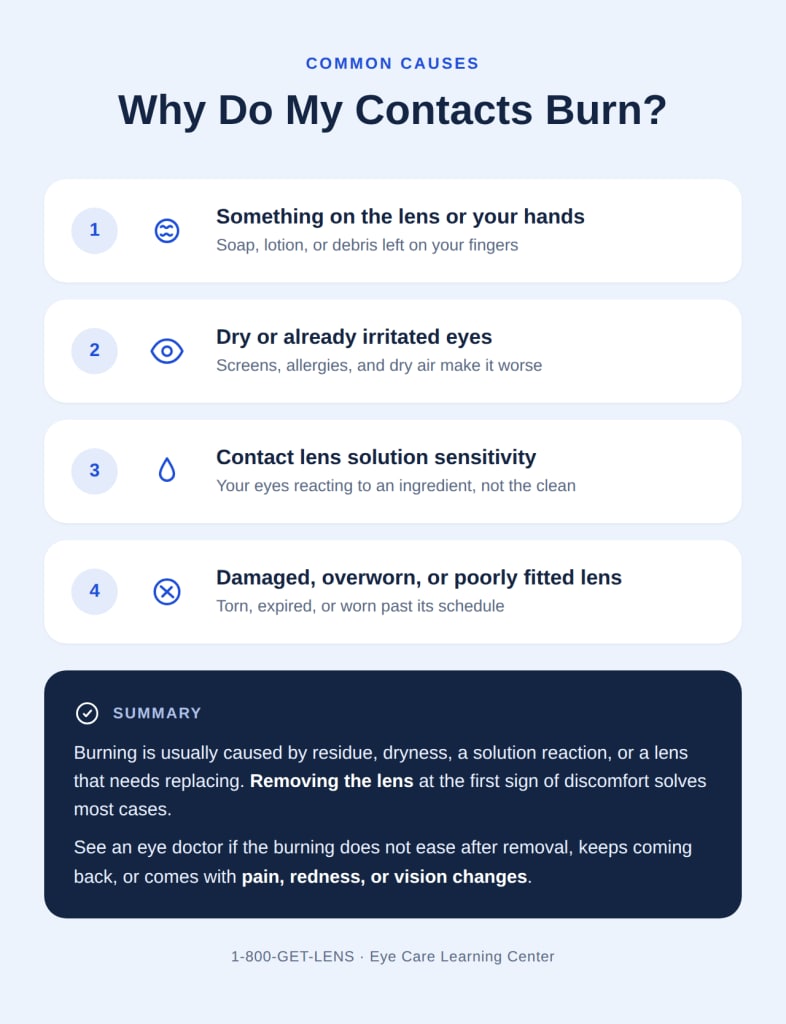
Contacts burn for several reasons, including something on the lens, dry eyes, solution sensitivity, an old or poorly fitted lens, or in rare cases an infection.
Burning is not a symptom to push through. This guide covers the common causes, ways to ease the sting, and when to call an eye doctor.
Burning During Insertion Usually Comes From the Lens or Your Hands
Burning right after insertion usually comes from something on the lens or your hands, a dry tear film, the solution, or how the lens sits on your eye. Technique plays a role for some people, but burning can happen even when you do everything right.
Note, burning is a general term. Some people describe it as stinging or plain irritation instead.
Wash and dry your hands fully before you touch a lens, and keep the following away from your contacts.
Soap
Lotion
Hand sanitizer
Perfume or cosmetics
Lint or debris
Check each lens for damage before you put it in, and open a new pair if anything looks off.
Dry or Already Irritated Eyes Make Insertion Sting
Dry or irritated eyes make the lens feel like it is sitting on an unstable surface, and that shows up as burning the moment the lens touches your eye.
Screen use, allergies, dry air, and wearing lenses past the recommended time all make dryness worse. Blink breaks and a humidifier in dry rooms can help.
Solution Sensitivity Can Cause Burning Even With a Clean Lens
A clean lens can still burn if your eyes react to an ingredient in the solution. Multi-purpose solutions such as Biotrue, Opti-Free, and Clear Care use different ingredients, so the reaction is about the product, not how well you cleaned the lens.
Stick to the solution your eye doctor or the lens manufacturer recommends. Switching products on your own raises the odds of a reaction.
Your Lens Itself Could Be Causing the Burn
A torn, inside-out, expired, overworn, or poorly fitted lens can irritate the surface of your eye. Check each lens for chips or tears, and wear lenses only as long as the manufacturer recommends.
A lens that is too tight, shifts out of place, or sits wrong needs attention from your eye doctor, who can update your prescription or adjust your fit.
Burning After Removal Points to a Different Cause
Burning after removal can come from dryness, overwear, removal friction, or an eye surface that was already irritated. Call an eye doctor if it shows up with pain or redness.
Removal technique plays a part too. Pinching a lens out with a dry fingertip or a long nail can scratch the eye surface, and that scratch can feel like burning after the lens is gone. Contact-safe rewetting drops right after removal can ease mild dryness, but avoid rubbing your eyes, since that adds more irritation to a surface that already feels raw.
What to Do the Moment Your Contacts Start to Burn
Remove the lens as soon as you notice burning instead of waiting it out. Wash your hands first, check the lens for damage, clean it with fresh solution, and switch to glasses for a few days if the burning does not settle.
Note, always follow the instructions from your lens manufacturer and eye doctor, and never rinse contacts with tap water.
Contact-Safe Eye Drops Help With Dryness, Not Every Type of Burning
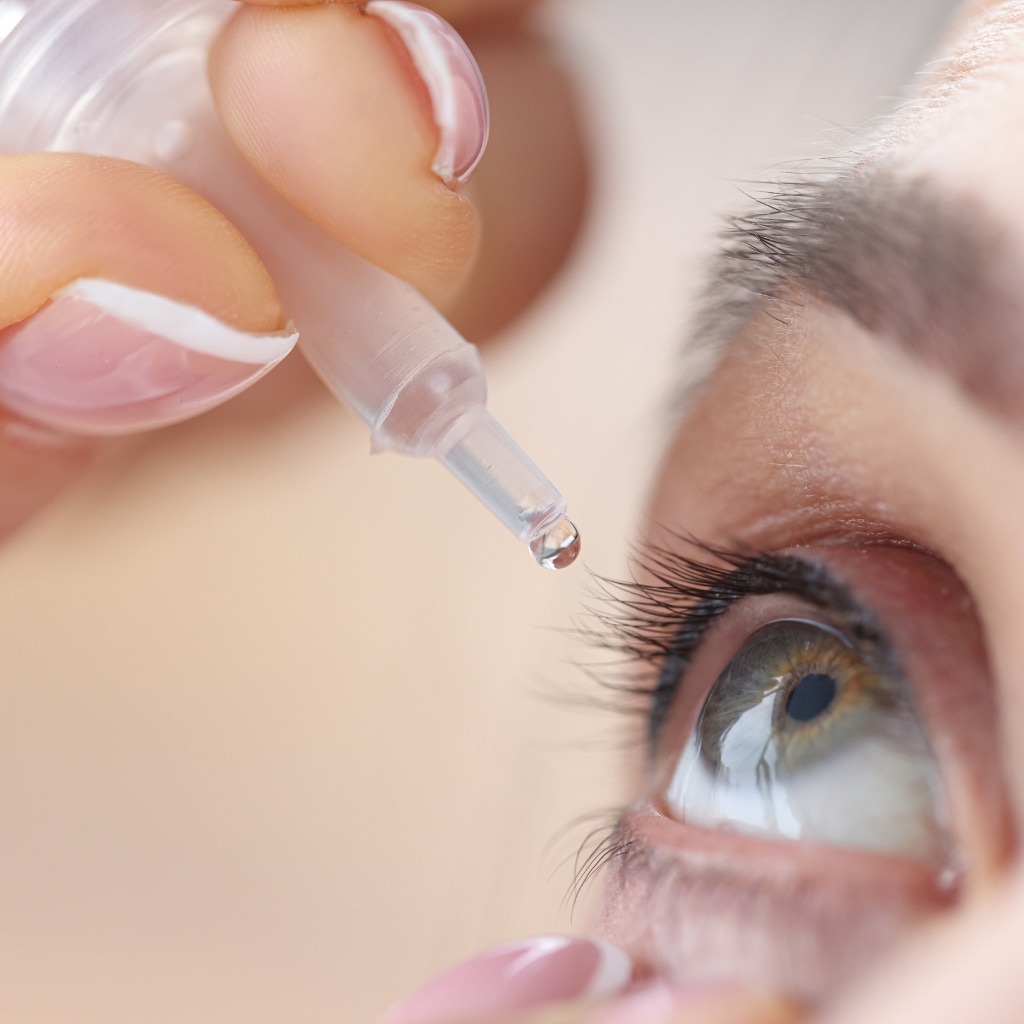
Lubricating drops labeled safe for contact lens wear can help if dryness is the cause. They will not fix pain, redness, or ongoing irritation, and regular eye drops can trap debris and make burning worse.
If the sting does not go away, see an eye doctor instead of trying another round of drops.
Simple Habits Lower Your Risk of Burning Contacts
Clean lenses, a solution that works for your eyes, and a prescription that matches your vision lower your risk of burning. Wash your hands before insertion, use fresh solution each time, replace lenses and cases on schedule, and avoid overwear.
Take your lenses out before bed unless your eye doctor says otherwise, and keep backup glasses nearby. If burning keeps coming back, ask your eye doctor whether a different lens, such as Acuvue Oasys, Biofinity, or Dailies Total1, would fit your eyes better.
Contacts Burning Is a Sign to Slow Down and Check Your Lenses
Burning eyes are a signal, not something to push past. Talk to your eye doctor if the discomfort sticks around or comes with other symptoms.
1-800-GET-LENS can help you reorder contacts and connect with an eye doctor near you when it is time for a checkup.
FAQs
Why Do My Contacts Burn All of a Sudden?
Sudden burning usually points to something new, such as a fresh batch of solution, a change in your environment, an old lens, or dry eyes.
Why Do My Contacts Burn When I Put Them In But Not After?
This is usually caused by residue on your hands or the lens, a dry tear film, or a reaction to your solution rather than the lens itself.
Is It Normal for Contacts to Burn a Little?
A brief, mild sting that fades within a minute can happen with certain solutions. Burning that lasts, gets worse, or comes back every time is not normal.
Can I Use Eye Drops if My Contacts Burn?
Contact-safe rewetting drops can ease burning caused by dryness. They are not a fix for pain, redness, or irritation that does not go away.
When Should I See a Doctor for Burning Contacts?
See an eye doctor if burning does not go away after you remove the lens, keeps coming back, or comes with pain, redness, swelling, discharge, light sensitivity, or changes in your vision.
References
Centers for Disease Control and Prevention. About Contact Lenses. CDC.gov. 2025. Centers for Disease Control and Prevention. About Cleaning, Disinfecting, and Storing Contact Lenses. CDC.gov. 2025. Centers for Disease Control and Prevention. What Causes Contact Lens-Related Eye Infections. CDC.gov. 2025. American Academy of Ophthalmology. How to Take Care of Contact Lenses. AAO.org. 2022. American Academy of Ophthalmology. Eye Infections From Contact Lenses. AAO.org. 2023. US Food and Drug Administration. Contact Lens Risks. FDA.gov. 2018. US Food and Drug Administration. Contact Lens Care. FDA.gov. 2018. US Food and Drug Administration. Contact Lens Solutions and Products. FDA.gov. 2018. American Optometric Association. Contact Lens Care. AOA.org. n.d. American Optometric Association. Managing the Care of Patients With Contact Lens-Related Dry Eye. AOA.org. 2021.