Some eyes are said to attract admirers without trying. Others supposedly belong to hopeless romantics, loyal partners, or people who fall in love too easily.
These beliefs come from a mix of traditional face reading, poetry, and modern beauty trends. In some cultures, certain eye shapes have long been associated with romantic luck. Others have picked up their reputations through films, literature, and popular descriptions of attractiveness.
Your eye shape won’t predict your romantic future, but the stories behind these beliefs are worth knowing. Here’s what eight eye shapes supposedly say about love.
1. Peach Blossom Eyes and Romantic Luck
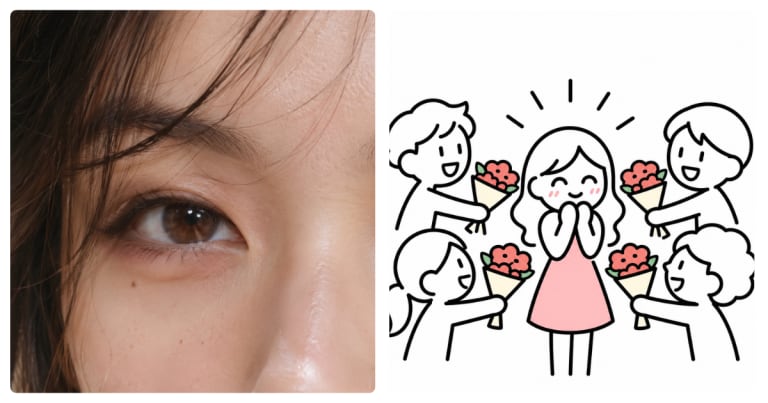
The myth: People with peach blossom eyes attract admirers naturally and have better luck finding love.
Peach blossom eyes, known as tao hua yan in Chinese, are often described as elongated eyes with gently curved corners. Their name comes from the peach blossom, a flower associated with romance in Chinese culture.
In traditional Chinese face reading, this eye shape is connected to tao hua yun, or romantic luck. People with peach blossom eyes are believed to attract attention through their expressions and make others feel drawn to them.
The Taiwan Ministry of Education’s dictionary even includes an entry for peach blossom eyes, describing their connection to romantic fortune and flirtatious expressions.
Of all the eye shapes on this list, peach blossom eyes have one of the clearest traditional links to love and attraction.
2. Phoenix Eyes and Mysterious Attraction
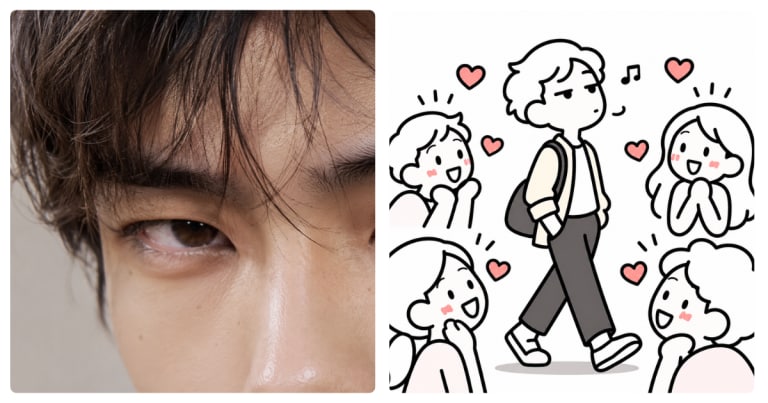
The myth: People with phoenix eyes attract romantic attention through their mysterious expressions and quiet confidence.
Phoenix eyes, or feng yan, are elongated eyes with slightly raised outer corners. The name comes from the phoenix, a mythical bird associated with nobility in Chinese culture.
Historically, phoenix eyes were admired as a beautiful facial feature. Chinese literary descriptions often used the term to praise a woman’s appearance.
Modern romantic interpretations associate this eye shape with someone who draws attention without being particularly expressive. The idea is that a person with phoenix eyes doesn’t need to flirt openly to catch someone’s interest.
Unlike peach blossom eyes, though, phoenix eyes don’t have a clearly established traditional connection to romantic luck. Their reputation for mystery and attraction comes largely from beauty descriptions.
3. Doe Eyes and the Hopeless Romantic
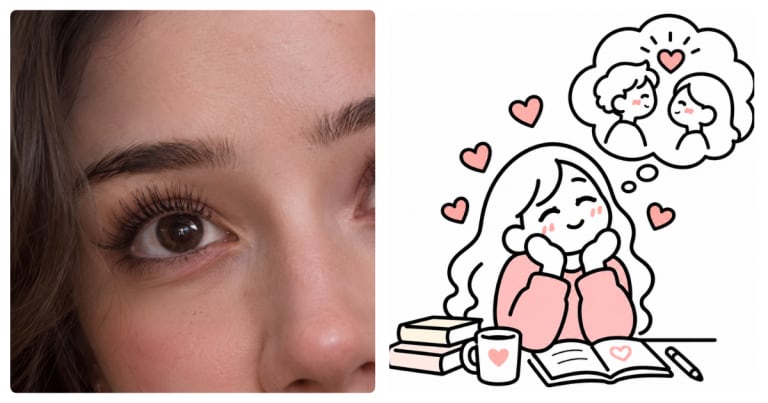
The myth: People with doe eyes are gentle, affectionate, and easily swept away by love.
Doe eyes are large, round, and open-looking, resembling the soft gaze of a deer. They’re often associated with innocence and emotional vulnerability.
In romantic films and literature, characters with doe eyes are frequently portrayed as sincere and trusting. Their wide-eyed expressions give them an innocent appearance, which audiences associate with tenderness.
This has contributed to the belief that doe-eyed people fall in love quickly and care deeply for their partners.
Of course, a sweet-looking expression doesn’t tell you how someone behaves in a relationship. Someone with doe eyes could be a hopeless romantic or the most emotionally guarded person you’ve met.
4. Lotus Eyes and Devoted Love
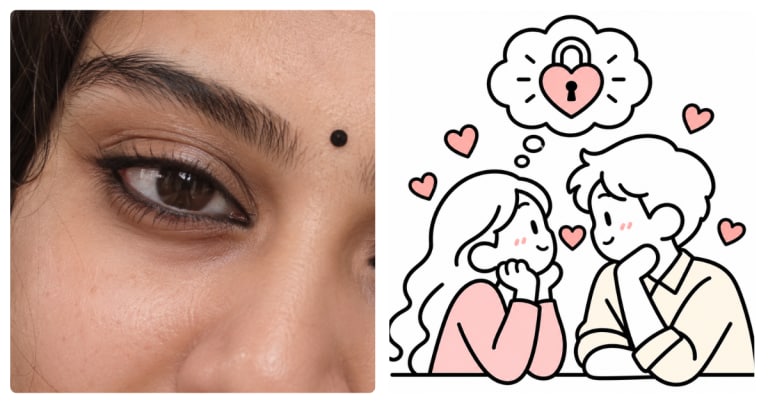
The myth: People with lotus eyes are loving, gentle, and deeply devoted to their romantic partners.
Lotus eyes are a poetic description of eyes that resemble the petals of a lotus flower. Unlike round or almond eyes, the term doesn’t refer to one widely recognized anatomical shape.
In Indian poetry, lotus-shaped eyes have long represented beauty and grace. The Sanskrit poet Kalidasa, for example, compared the eyes of the Hindu goddess Parvati to blue lotuses.
The lotus also appears in traditional Indian writings about affection and longing. Its association with devotion has influenced romantic interpretations of lotus-shaped eyes.
Still, the original literary comparisons describe beauty rather than predict someone’s loyalty. The idea that people with lotus eyes make devoted partners is a romantic extension of that symbolism.
5. Almond Eyes and Lasting Relationships
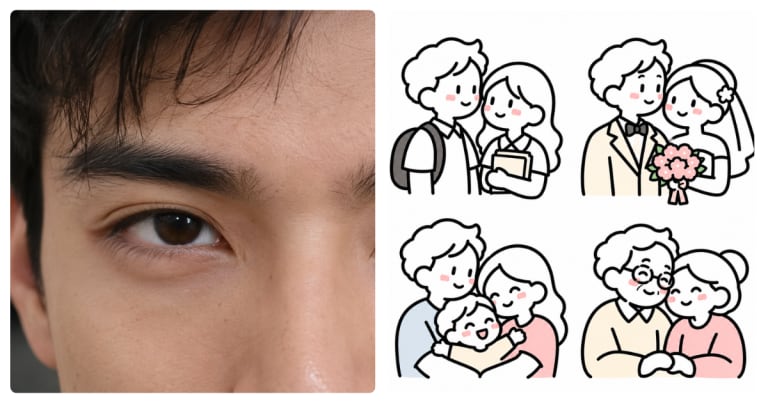
The myth: People with almond eyes are emotionally balanced, loyal, and drawn to long-term relationships.
Almond eyes have an elongated shape that tapers toward the corners, resembling the outline of an almond.
Some modern face-reading descriptions associate this eye shape with patience and emotional stability. In romantic interpretations, these traits have turned almond-eyed people into the supposedly dependable partners of the dating world.
They’re often described as individuals who take relationships seriously and prefer meaningful connections over brief romances.
There isn’t scientific evidence connecting almond eyes to loyalty or emotional maturity. A person’s commitment depends on their values and behavior, not the shape of their eyelids.
6. Round Eyes and Love at First Sight
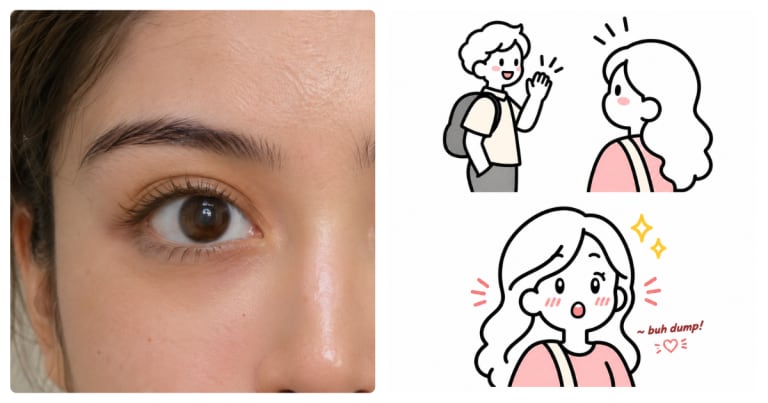
The myth: People with round eyes fall in love easily and aren’t afraid to show their feelings.
Round eyes have a circular appearance and a noticeably open shape. Their natural appearance can make expressions of excitement or surprise seem more pronounced.
In modern personality interpretations, round-eyed people are sometimes described as spontaneous and emotionally expressive. These descriptions have inspired the idea that they’re the type to develop a crush quickly or believe in love at first sight.
Their supposed romantic personality is outgoing, affectionate, and willing to make the first move.
But an open-looking gaze doesn’t reveal how quickly someone forms an emotional attachment. Round eyes aren’t an indication that someone wears their heart on their sleeve.
7. Upturned Eyes and the Natural Flirt
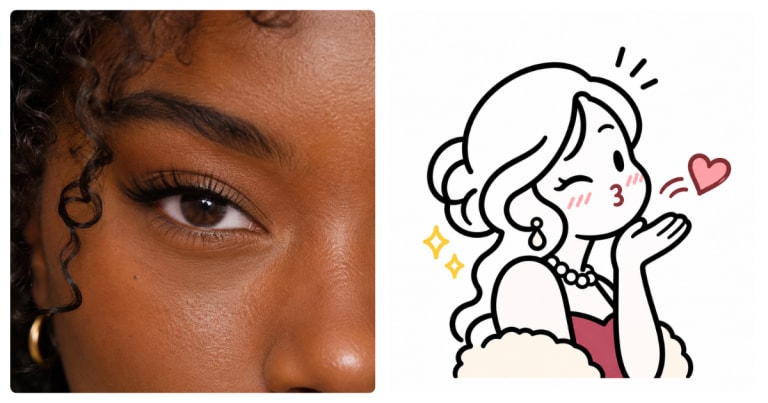
The myth: People with upturned eyes are confident, flirtatious, and naturally attractive to others.
Upturned eyes have outer corners that sit slightly higher than their inner corners. Their angled shape creates a lifted appearance.
In modern beauty culture, upturned eyes are frequently associated with glamour and seductive expressions. This has led to romantic stereotypes about people with this eye shape being confident flirts who know how to capture someone’s attention.
The belief has little to do with historical folklore. It’s mostly influenced by beauty preferences and the way certain facial features are portrayed in photographs and films.
Someone with upturned eyes isn’t necessarily flirtatious. They could be shy, reserved, or completely uninterested in romance.
8. Downturned Eyes and the Sensitive Lover
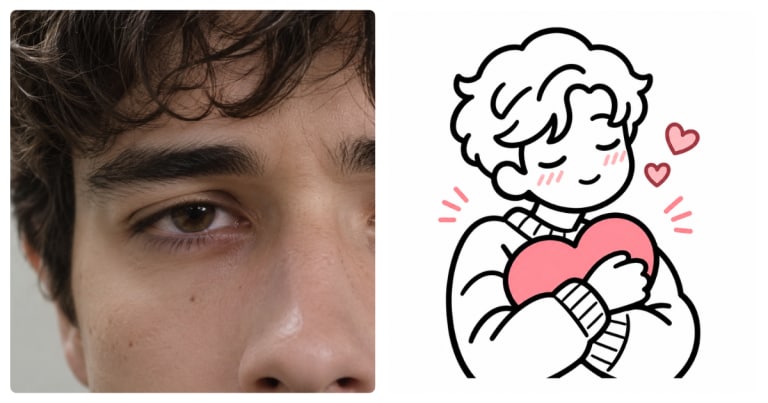
The myth: People with downturned eyes are sensitive romantics who love deeply and become emotionally attached to their partners.
Downturned eyes have outer corners that sit slightly lower than their inner corners. This creates a naturally soft expression that people sometimes interpret as sadness or tenderness.
In romantic storytelling, downturned eyes are often used to portray vulnerable characters. Their expressions can appear wistful, even when the person is feeling perfectly happy.
This association has inspired the belief that people with downturned eyes are compassionate partners who feel emotions intensely.
It’s a romantic interpretation rather than an established cultural superstition. Downturned eyes don’t reveal someone’s emotional sensitivity or how much affection they have for another person.
Can Your Eye Shape Really Predict Your Love Life?
There’s no scientific evidence that eye shape determines your personality, romantic compatibility, or chances of finding love.
Traditional face reading, also known as physiognomy, attempts to connect physical features with personality and destiny. These interpretations have cultural histories, but they aren’t reliable methods for judging someone’s character.
What researchers have studied is the relationship between eye contact and attraction.
A 2024 study published in Archives of Sexual Behavior examined eye contact during speed dating. Researchers observed 60 participants across 240 speed dates. Participants were more inclined to select dating partners with whom they shared greater eye contact. A separate 2014 study in Psychological Science examined how people’s gaze patterns differed when considering romantic love and sexual desire. Researchers found that visual attention shifted depending on the type of attraction being considered.
Neither study suggests that eye shape reveals someone’s romantic future. They do show that where people look and how they interact visually can be associated with attraction.
Eye contact is only one part of romantic communication. A meaningful glance doesn’t necessarily mean someone is in love.
What Your Eyes Really Say About Love
Peach blossom eyes have a reputation for romantic luck. Doe eyes are associated with tender feelings, while upturned eyes have become a symbol of flirtatious confidence.
These beliefs reflect how different cultures and generations have interpreted beauty. Some come from traditional literature, while others are modern stereotypes built around facial expressions. There’s nothing wrong with enjoying these romantic myths, especially when they make you appreciate a feature you’ve had your whole life.
Just don’t let them decide whom you date or how you see yourself. Your eye shape is something you’re born with. The way you treat the people you love is entirely your own.
References
- Fengyan 鳳眼 (Phoenix Eyes). Duke Kunshan University. https://sites.duke.edu/destinyofrebirth/fengyan-%E9%B3%B3%E7%9C%BC-phoenix-eyes/. Published August 15, 2024. Accessed November 11, 2026.
- Lotus: Once You Look for It, You’ll Find It Everywhere in Indic Culture. India Today. https://www.indiatoday.in/books/story/devdutt-pattanaik-lotus-once-you-look-for-it-you-will-find-it-everywhere-in-indic-culture-2915567-2026-05-25. Published May 25, 2026. Accessed November 11, 2026.
- Love Is in the Gaze: An Eye-Tracking Study of Love and Sexual Desire. Psychological Science. https://pubmed.ncbi.nlm.nih.gov/25031302/. Published July 16, 2014. Accessed November 11, 2026.
- Peach Blossom Eyes (桃花眼). Ministry of Education, Taiwan. https://dict.concised.moe.edu.tw/dictView.jsp?ID=10177&la=1&powerMode=0. Publication date not listed. Accessed November 11, 2026.
- Sharing and Receiving Eye-Contact Predicts Mate Choice After a 5-Minute Conversation: Evidence from a Speed-Dating Study. Archives of Sexual Behavior. https://pubmed.ncbi.nlm.nih.gov/38379110/. Published February 20, 2024. Accessed November 11, 2026.