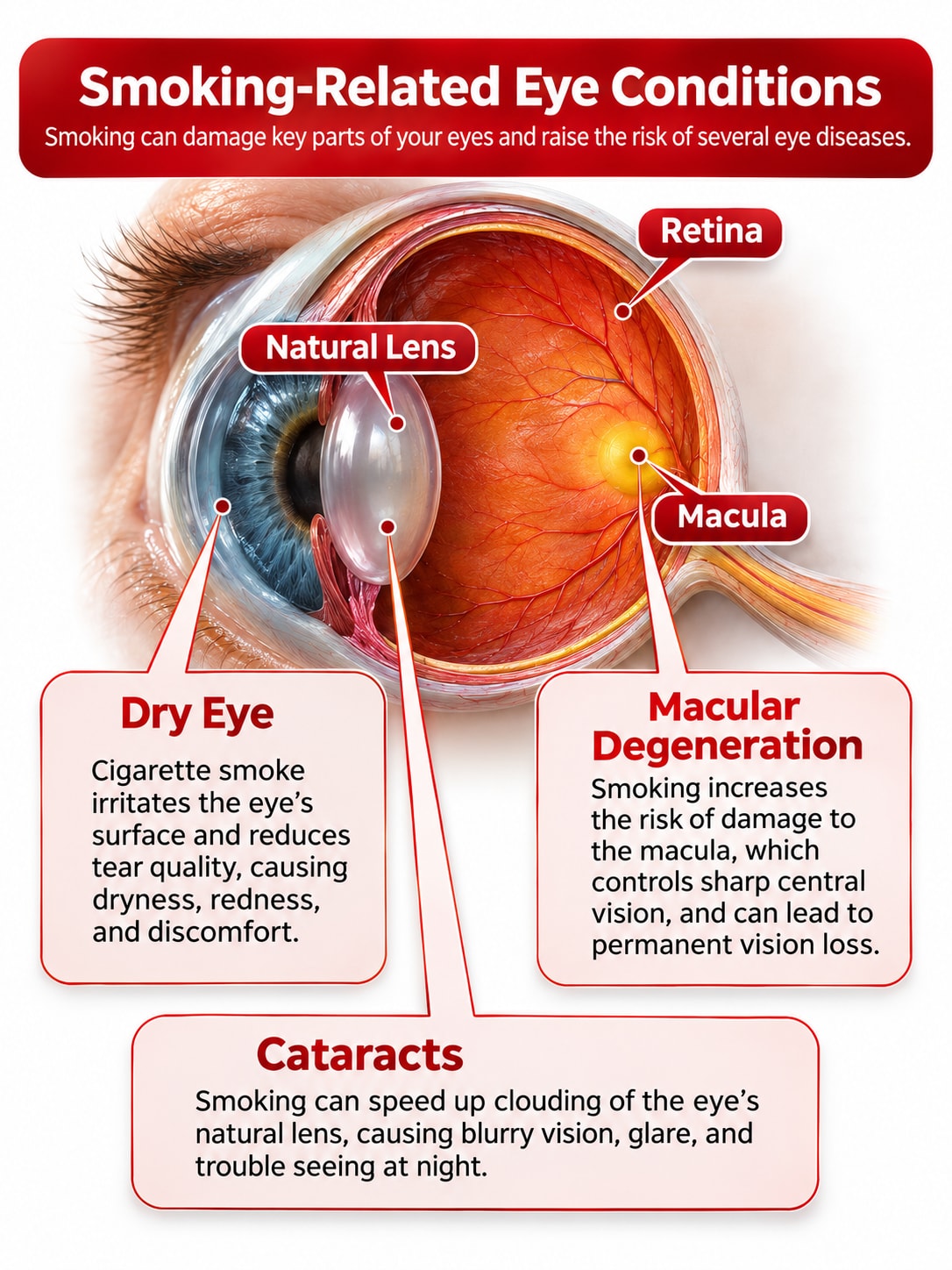
Smoking damages more than just your lungs and heart. It also affects your eyes, increasing the risk of dry eye, cataracts, age-related macular degeneration, and other conditions that damage your vision. Chemicals in cigarette smoke can irritate eye tissues, affect blood circulation, and contribute to long-term damage.
Some effects, such as redness and dryness, appear shortly after exposure. Others develop gradually and can lead to permanent vision loss. Knowing how smoking affects your eyes will help you recognize early warning signs and protect your eyesight.
How Does Smoking Affect Your Eyesight?
Cigarette smoke contains nicotine, carbon monoxide, and other harmful chemicals that contribute to inflammation and cellular damage. Smoking affects your eyes in several ways.
Cigarette smoke irritates the eye’s surface and disrupts its protective tear film.
Tobacco chemicals damage retinal cells and other eye tissues.
Smoking affects blood circulation and increases the risk of sight-threatening eye diseases.
Eye Diseases and Vision Problems Caused or Worsened by Smoking
Smoking is linked to several eye diseases, including conditions that can permanently affect your vision. The risks depend on smoking history, existing health conditions, and the type of eye disease.
1. Dry Eyes and Eye Irritation
Cigarette smoke disrupts the tear film, causing dryness, burning, redness, and watering. Exposure can worsen existingdry eye symptoms and make everyday activities uncomfortable.
2. Age-Related Macular Degeneration (AMD)
Age-related macular degeneration (AMD) damages the macula, which controls sharp central vision. It can make reading and recognizing faces difficult. Smoking increases the risk ofmacular degeneration and its progression, potentially leading to permanent vision loss.
3. Cataracts
Cataracts develop when the eye’s natural lens becomes cloudy. Symptoms include blurry vision, glare, and difficulty seeing at night. Smoking increases cataract risk through oxidative damage to the lens. Cataract surgery can restore vision affected by lens clouding.
4. Diabetic Retinopathy
Diabetic retinopathy damages retinal blood vessels and can cause blurred vision or permanent sight loss. Smoking increases the risk of type 2 diabetes and complicates blood sugar management, adding to the health risks faced by people with diabetic retinopathy.
5. Thyroid Eye Disease and Uveitis
Smoking is strongly linked to thyroid eye disease, which causes swelling, bulging eyes, and double vision. Smoking is also associated with uveitis, an inflammatory condition causing eye pain, redness, and light sensitivity. Both conditions require medical evaluation.
Can Smoking Cause Vision Loss or Blindness?
Yes. Smoking increases the risk of sight-threatening diseases, particularly advanced AMD. Retinal damage can cause permanent vision loss, while cataract-related vision problems are often treatable through surgery.
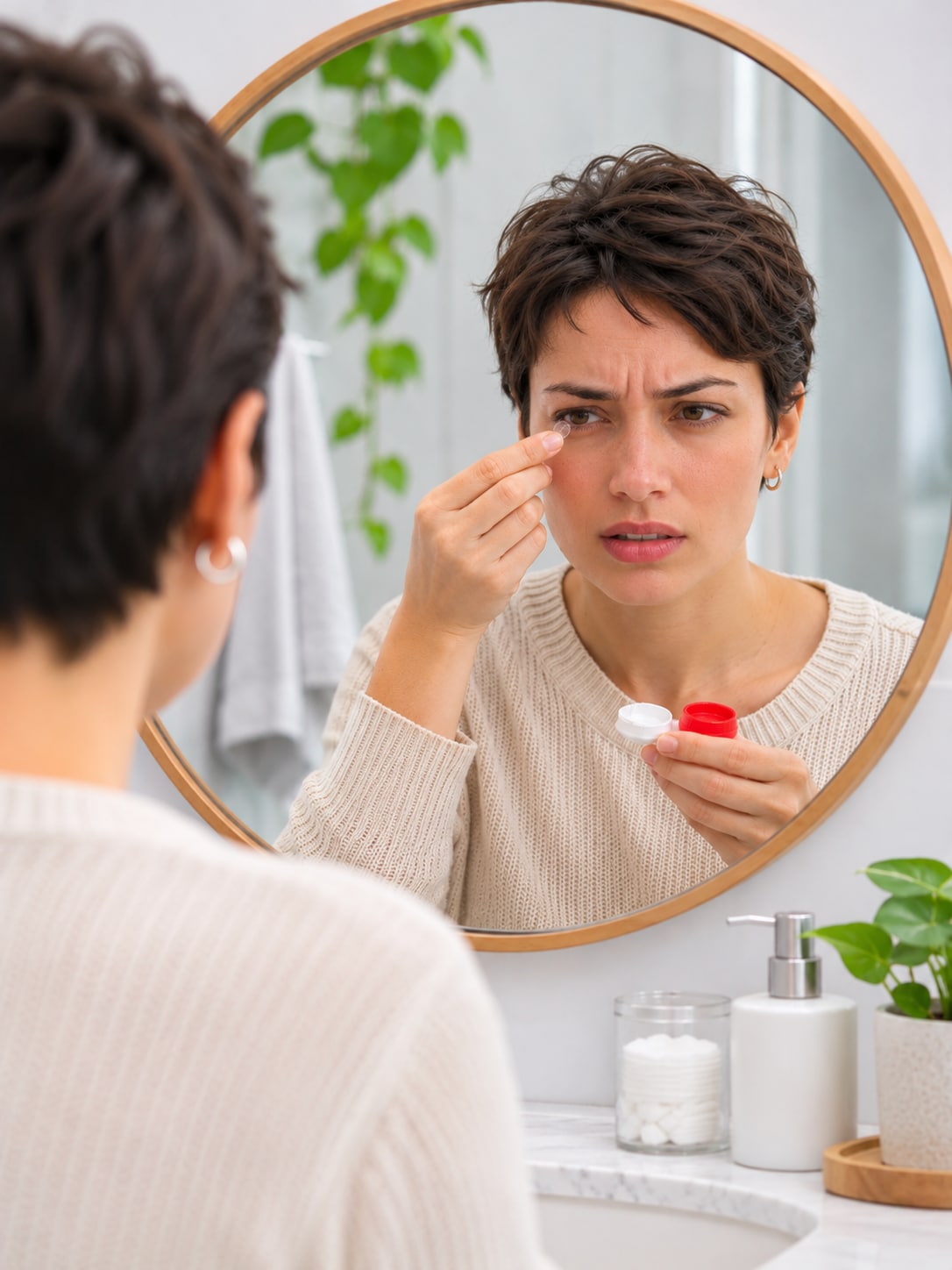
Cigarette smoke irritates the eye’s surface and disrupts the tear film, making contact lenses uncomfortable.
Smoke exposure can make contact lenses feel dry or gritty.
Redness and burning can become more noticeable during lens wear.
Persistent irritation can interfere with comfortable daily contact lens use.
Remove your lenses when irritation occurs. An eye doctor can assess recurring symptoms and recommend appropriatecontact lenses for dry eyes.
Can Secondhand Smoke Damage Your Eyes?
Yes. Secondhand smoke can irritate the eyes of nonsmokers, causing redness, burning, and dryness. Repeated exposure raises health concerns, particularly for children and people with existing eye conditions. Keeping homes, cars, and shared indoor spaces smoke-free reduces unnecessary exposure.
Does Quitting Smoking Improve Your Eyesight?
Quitting smoking reduces exposure to harmful chemicals and can ease smoke-related irritation. It also lowers future risks associated with cataracts, AMD, and other smoking-related eye conditions.
Existing retinal damage isn’t reversible through smoking cessation alone. Regular eye examinations remain necessary for monitoring eye health.
How to Protect Your Eyes From Smoking-Related Damage
Reducing tobacco exposure and monitoring your eye health can help protect your eyesight.
Quit smoking and ask your healthcare provider about proven cessation treatments.
Avoid secondhand smoke in homes, cars, and enclosed spaces.
Schedule regular eye examinations to detect early signs of eye disease.
Manage diabetes and high blood pressure according to medical recommendations.
Maintain a balanced diet and stay physically active.
Seek medical attention for persistent discomfort or changes in vision.
Questions About Smoking and Eye Health
What Are the Early Signs of Smoking-Related Eye Damage?
Early signs include persistent dryness, redness, blurred vision, and increased glare. Certain conditions, including early AMD, can develop without noticeable symptoms.
Can Vaping Cause the Same Eye Problems as Cigarette Smoking?
Vaping aerosols contain substances that can irritate the eyes. Research into their long-term effects is ongoing, and their risks aren’t identical to cigarette smoking.
Can Smoking Cause Yellow Eyes?
Yellowing of the whites of your eyes isn’t a typical direct effect of smoking. It can indicate jaundice or another medical condition that requires prompt evaluation.
Where Can I Find an Eye Doctor for Smoking-Related Eye Conditions?
Visit a licensed optometrist or ophthalmologist for an eye examination. They can assess your symptoms and refer you to a specialist when necessary. Sudden vision loss or severe eye pain requires urgent care.
Disclaimer: This information is general in nature and is not intended as a substitute for professional medical advice, diagnosis, or treatment.
References
Age-Related Macular Degeneration (AMD). https://www.nei.nih.gov/eye-health-information/eye-conditions-and-diseases/age-related-macular-degeneration. Accessed November 19, 2026.
Diabetes and Smoking. https://www.cdc.gov/diabetes/risk-factors/diabetes-and-smoking.html. Accessed November 19, 2026.
How Do Smoking and Vaping Damage the Eyes? https://www.aao.org/eye-health/tips-prevention/smokers. Accessed November 19, 2026.
How Smoking Can Contribute to Vision Loss and Blindness. https://www.fda.gov/tobacco-products/health-effects-tobacco-use/how-smoking-can-contribute-vision-loss-and-blindness. Accessed November 19, 2026.
Keep Your Eyes Healthy. https://www.nei.nih.gov/eye-health-information/healthy-vision/how-eyes-work/keep-your-eyes-healthy. Accessed November 19, 2026.
Preventing Vision Loss. https://www.cdc.gov/vision-health/prevention/index.html. Accessed November 19, 2026.
Vision Loss and Diabetes. https://www.cdc.gov/diabetes/diabetes-complications/diabetes-and-vision-loss.html. Accessed November 19, 2026.
Vision Loss, Blindness, and Smoking. https://www.cdc.gov/tobacco/campaign/tips/diseases/vision-loss-blindness.html. Accessed November 19, 2026.