
Table of Contents
Eye twitching can feel like a flutter, pulse, or repeated eyelid movement. It can happen unexpectedly, sometimes lasting a few seconds or returning throughout the day. Although it’s usually harmless, persistent twitching or vision-related symptoms deserve attention.
Stress, lack of sleep, caffeine, and eye irritation are among the common causes. Knowing what triggers eye twitching and how to relieve it can help you manage the discomfort. It’s also important to know when eye twitching requires a visit to an eye doctor.
What Does It Mean When Your Eye Twitches?
Eyelid twitching, also called eyelid myokymia, happens when eyelid muscles contract involuntarily. These movements typically affect one eye and can occur in the upper or lower eyelid. The twitching stops on its own without treatment.
What Causes Eye Twitching?
Several everyday factors can trigger involuntary eyelid movements. The most common eye twitching causes include the following.
1. Stress, Fatigue, and Caffeine
Stress and eye twitching frequently occur together. Anxiety, sleep deprivation, and excessive caffeine or alcohol consumption can trigger eyelid spasms. Getting enough rest and reducing stimulant intake can help relieve recurring twitching.
2. Digital Eye Strain and Dry Eyes
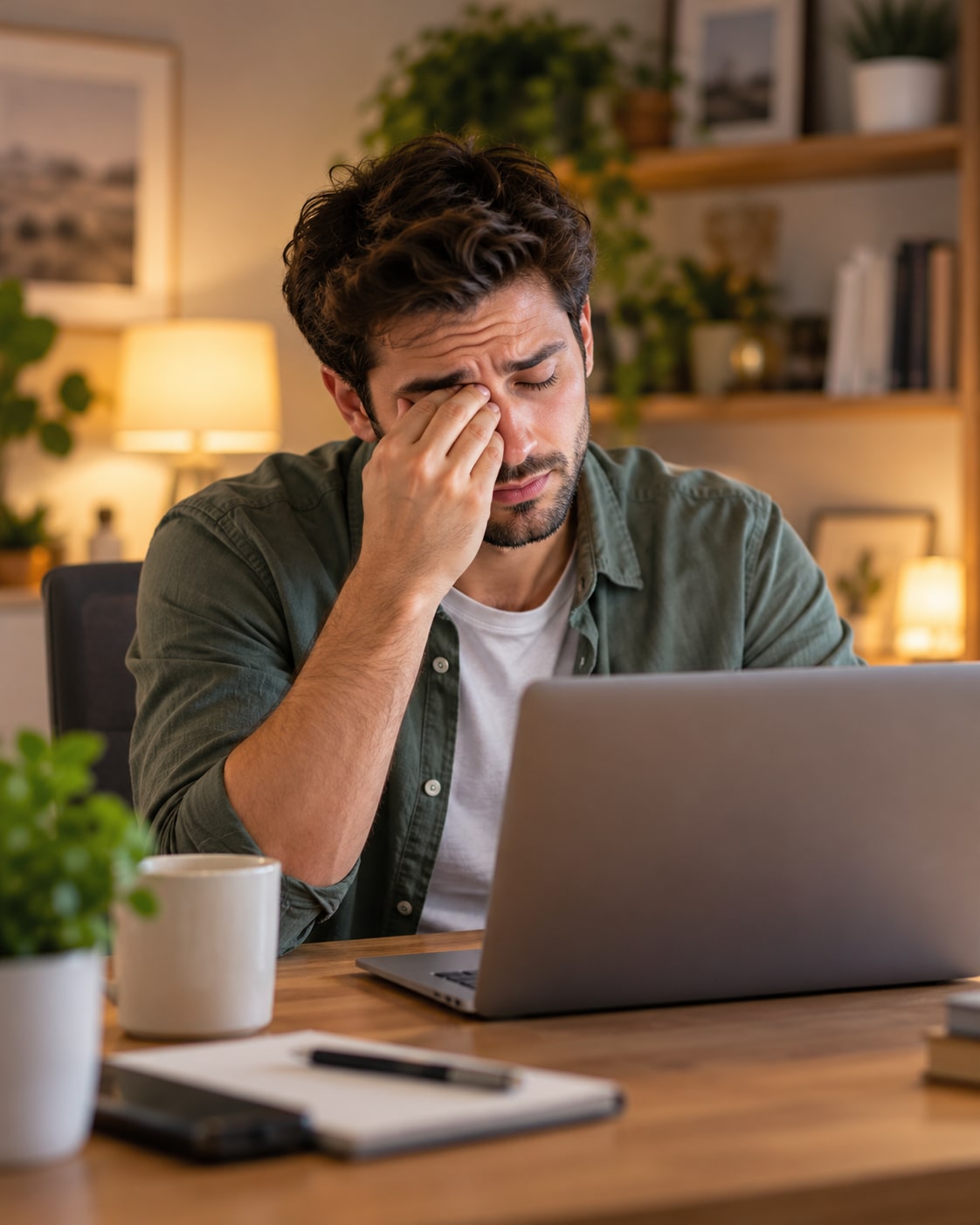
Extended screen time can cause eye strain and reduce blinking, contributing to dryness and irritation. People who wear contact lenses for computer use can also notice discomfort during prolonged screen sessions. Taking regular breaks is one way of reducing digital eye strain and relieving eye fatigue.
3. Contact Lens Irritation and Other Triggers
Contact lens discomfort, allergies, and environmental irritants can contribute to eyelid irritation. Recognizing the differences between dry eyes and eye allergies can help identify potential sources of discomfort. People experiencing recurring dryness can also ask their eye doctor about contact lenses for dry eyes and appropriate wearing habits.
How to Stop Eye Twitching at Home
Most mild eyelid twitches resolve without medical treatment. These habits can help address common triggers and reduce discomfort.
- Get seven to nine hours of sleep each night and practice relaxation techniques.
- Reduce excessive caffeine and alcohol consumption.
- Follow the 20-20-20 rule by looking 20 feet away for 20 seconds every 20 minutes during screen use.
- Use lubricating eye drops for dryness and a comfortably warm compress to soothe irritated eyelids.
- Take breaks from your contacts when discomfort develops. Wear daily wear contact lenses only according to your eye doctor’s prescribed wearing schedule.

Persistent symptoms should be evaluated rather than managed through home care alone.
How Long Does Eye Twitching Usually Last?
Individual eyelid spasms typically last seconds or minutes, although episodes can return throughout the day. Eye twitching for days can occur, particularly when fatigue, stress, or irritation continues. Twitching that persists beyond two weeks warrants an eye examination.
When Should You Worry About Eye Twitching?
An occasional eyelid twitch rarely indicates a serious problem. Certain symptoms, though, deserve professional attention.
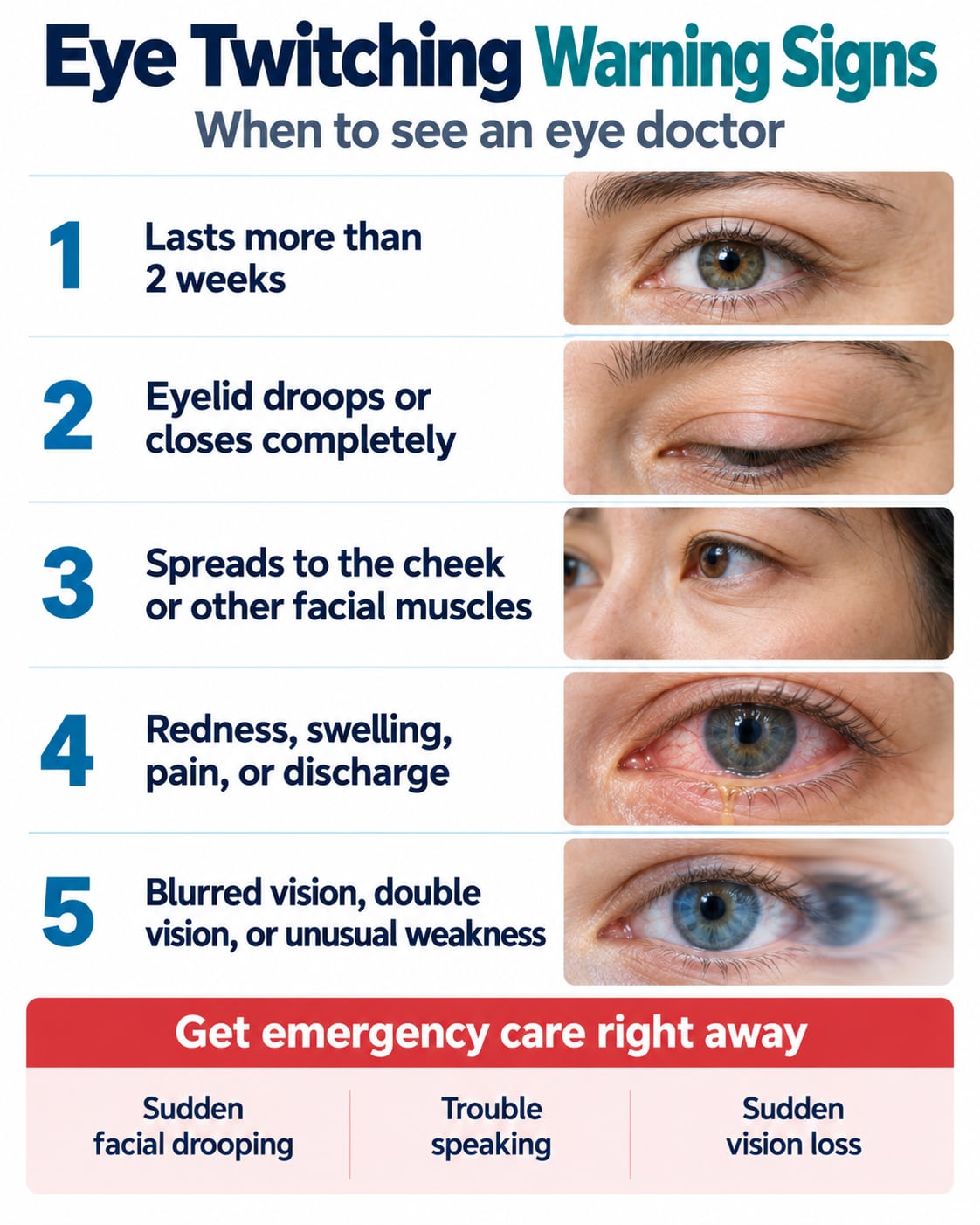
- Twitching continues beyond two weeks or becomes more frequent.
- Your eyelid droops, closes completely, or becomes difficult to open.
- Spasms spread to your cheek, mouth, or other facial muscles.
- Your eye becomes red, swollen, painful, or develops discharge.
- You notice blurred vision, double vision, or unusual muscle weakness.
Sudden facial drooping, difficulty speaking, or vision loss requires emergency medical attention.
Can Eye Twitching Be a Sign of a Serious Medical Condition?
Persistent or unusually strong spasms can sometimes indicate a movement disorder. Two conditions associated with involuntary eyelid movements are benign essential blepharospasm and hemifacial spasm.
Benign Essential Blepharospasm
This neurological movement disorder causes repeated blinking or forceful eyelid closure, typically affecting both eyes. Severe contractions can interfere with daily activities and vision.
Hemifacial Spasm
Hemifacial spasm causes involuntary contractions on one side of the face. Twitching typically begins around the eye and can spread to the cheek or mouth. Both conditions require medical evaluation.
What Else You Should Know About Eye Twitching
1. Why Is Only One Eye Twitching?
Left eye twitching and right eye twitching are both common. Eyelid myokymia affects one eye at a time, and the affected side doesn’t determine whether the twitching is serious. Upper eyelid twitching and lower eyelid twitching can occur.
2. Can Vitamin Deficiencies Cause Eye Twitching?
Certain nutritional deficiencies affect muscle and nerve function, but research hasn’t established a consistent connection between specific vitamin deficiencies and ordinary eyelid myokymia. Speak with a healthcare professional before taking supplements.
3. Can Eye Twitching Be a Sign of a Stroke?
Isolated eyelid twitching isn’t a typical stroke symptom. Sudden facial weakness, speech difficulties, or vision changes are warning signs requiring emergency care.
4. Can Contact Lenses Cause Eye Twitching?
Contact lenses don’t directly cause eyelid muscle spasms, but lens-related dryness and irritation can contribute to discomfort. Symptoms such as burning, redness, or stinging can have several causes, so knowing why contacts burn can help identify possible issues. Remove your lenses when irritation develops and contact your eye doctor when symptoms persist.
When Should You See an Eye Doctor for Eye Twitching?
Schedule an appointment when twitching lasts longer than two weeks, affects daily activities, or occurs alongside unusual facial movements. An eye doctor can assess your symptoms, examine your eyelids, and recommend appropriate care.
Most eye twitches disappear after addressing common triggers. Paying attention to persistent symptoms and changes in your vision can help you recognize when to seek professional care.
Disclaimer: This article is provided for general information only and should not be used in place of professional advice, diagnosis, or treatment.
References
- Contact Lenses. https://www.nei.nih.gov/eye-health-information/healthy-vision/contact-lenses. Accessed October 16, 2026.
- Eye & Eyelid Twitching: What It Is, Causes & Treatment. https://my.clevelandclinic.org/health/symptoms/17663-eye-twitching. Accessed October 16, 2026.
- Eye Twitching – Causes and Definition. https://www.mayoclinic.org/symptoms/eye-twitching/basics/causes/sym-20050838. Accessed October 16, 2026.
- Eyelid Myokymia. https://eyewiki.aao.org/Eyelid_Myokymia. Accessed October 16, 2026.
- Twitching Eyes and Muscles. https://www.nhs.uk/symptoms/twitching-eyes-and-muscles/. Accessed October 16, 2026.
- Why Is My Eye Twitching? https://health.osu.edu/health/eye-health/eye-twitching. Accessed October 16, 2026.
Related Articles
-
Soft Contact Lenses: How to Choose the Best Design for Your Needs
-
Understanding Potential Risks and Complications of LASIK Surgery
-
Can You Wear Contacts and Glasses at the Same Time?
-

Men’s vs. Women’s Eyeglass Frames: What’s the Difference?
-
Can You Use Eye Drops With Contacts? What’s Safe and What to Avoid