Table of Contents
Night driving can feel harder with contact lenses when headlights stretch, road signs blur, or halos appear around traffic lights. Low light makes your pupils widen so more light enters the eye. That extra light can expose small prescription errors, lens dryness, deposits, or lens rotation. No contact lens is made only for night driving.
The stronger approach is to choose the lens type that matches the reason your vision feels worse after dark. The best contact lenses for night driving can include daily disposables, toric lenses, aspheric designs, or moisture-focused lenses. Start by comparing contact lenses for night driving, then bring specific symptoms to your next eye exam. Tell your doctor if headlights look streaky, doubled, ringed, too bright, or hazy. Those details help narrow down the cause.
Why Night Driving Feels Harder With Contacts
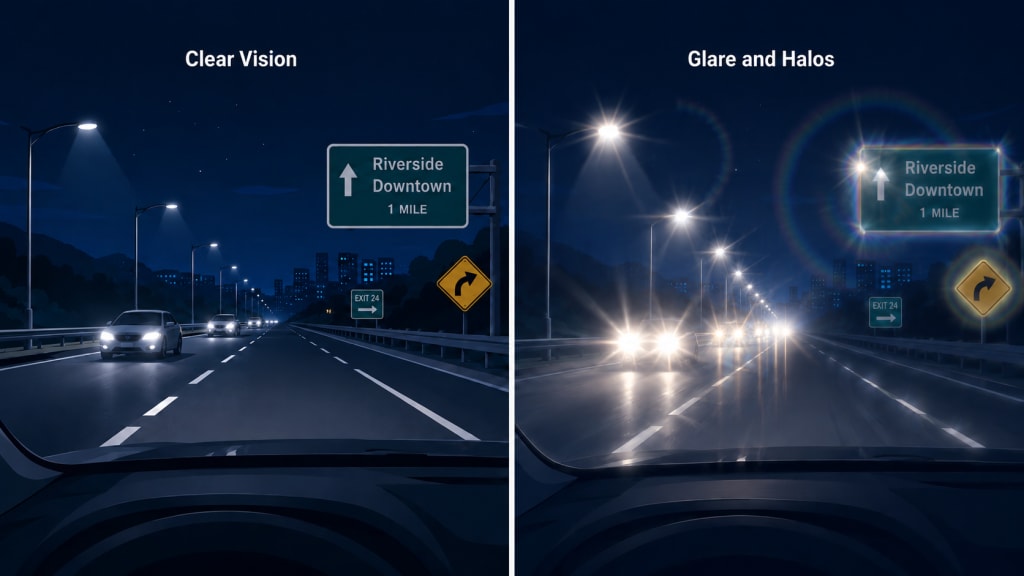
At night, your pupils widen to gather more light. Wider pupils also let more stray light enter through the outer edges of the cornea and contact lens. If the lens surface is dry, dirty, or off-center, that stray light can scatter into glare, halos, or starbursts.
This is why some contact lens wearers feel clear during the day but less sharp at night. A small amount of blur can become more noticeable under headlights. Glare also reduces contrast around road signs and lane markings.
What Contact Lenses Improve Vision for Night Driving
The best contacts for driving at night are not a single product category. The right choice depends on the cause of the glare. Some wearers need cleaner lens surfaces, astigmatism correction, or a design that handles spherical aberration better.
Daily Disposable Contacts for Night Driving
Daily contact lenses give you a fresh pair each day, which can reduce buildup that scatters light. DAILIES TOTAL1, PRECISION1, and 1-Day ACUVUE options can fit this discussion if evening haze affects nighttime clarity.
Moisturizing Contacts for Night Driving
Moisture-focused lenses can help when dryness causes vision to fluctuate between blinks. DAILIES TOTAL1 uses water-gradient technology, with surface water content that approaches 100 percent. For dry evening eyes, DAILIES 1 Day contact lenses are worth discussing.
Toric Lenses for Night Driving
Astigmatism can make headlights look smeared, doubled, or stretched. Toric contact lenses correct astigmatism, but stability is the main issue after dark. If a toric lens rotates, vision can shift around headlights and road signs.
Contact Lenses for Astigmatism Night Driving
For astigmatism, compare contact lenses for astigmatism with your doctor. ACUVUE OASYS for Astigmatism uses BLINK STABILIZED Design, while DAILIES TOTAL1 for Astigmatism uses Precision Balance 8|4 design. Both aim to keep the lens properly oriented.
Aspheric Contact Lenses Night Driving
Aspheric contact lenses can reduce spherical aberration, which affects how light focuses through the outer pupil. That can give some wearers cleaner light edges. If halos or starbursts are your main complaint, ask whether an aspheric design fits your prescription and eye shape.
ACUVUE OASYS Night Driving
ACUVUE OASYS can fit night-driving conversations through moisture, toric stability, and lens design. Start with ACUVUE contact lenses if your doctor already prescribes ACUVUE. Ask which version fits your symptoms after dark.
Photochromic Contact Lenses Night Driving
ACUVUE OASYS with Transitions was FDA-cleared as a light-adaptive contact lens that darkens in bright light and clears in low light. Always check with your eye doctor for changes in availability. Photochromic contacts should not replace sunglasses or night-driving care.
What About Anti-Glare Contact Lenses
Searches for anti-glare contact lenses, anti-reflective contact lenses, and contact lenses that reduce glare can be misleading. Contacts sit on the eye, so they do not work like anti-reflective eyeglass coatings. The real goal is to reduce the reasons light scatters.
That means better lens fit, fresher lenses, moisture, astigmatism correction, and updated prescriptions. If you wear glasses over contacts, anti-reflective coating on the glasses can reduce reflections from the eyeglass lenses. For contacts, ask about lens type rather than coating.
Contacts for Halos Around Headlights
Halos and starbursts can come from several contact lens and eye health issues. If new contacts do not help, schedule an eye exam instead of guessing.
Common causes include the following:
- Dry eyes can scatter light when the tear film breaks up over your lenses.
- Lens deposits can create haze that makes headlights look brighter or more smeared.
- Astigmatism can make lights look stretched, doubled, or streaky after dark.
- Spherical aberration can create softer edges around light sources when pupils widen.
- Cataracts or corneal changes can make glare and halos worse over time.
- An outdated prescription can feel more noticeable during low-light driving.
Colored contacts deserve extra caution. The printed area and fixed clear opening can interfere with your pupil zone in low light, especially if the lens moves. If colored lenses make vision dim, blocked, or blurry, avoid night driving in them.
Yellow-tinted night-driving lenses also deserve caution. A 2019 JAMA Ophthalmology study found no night-driving benefit for yellow-lens glasses.
How to Choose the Best Contacts for Driving at Night
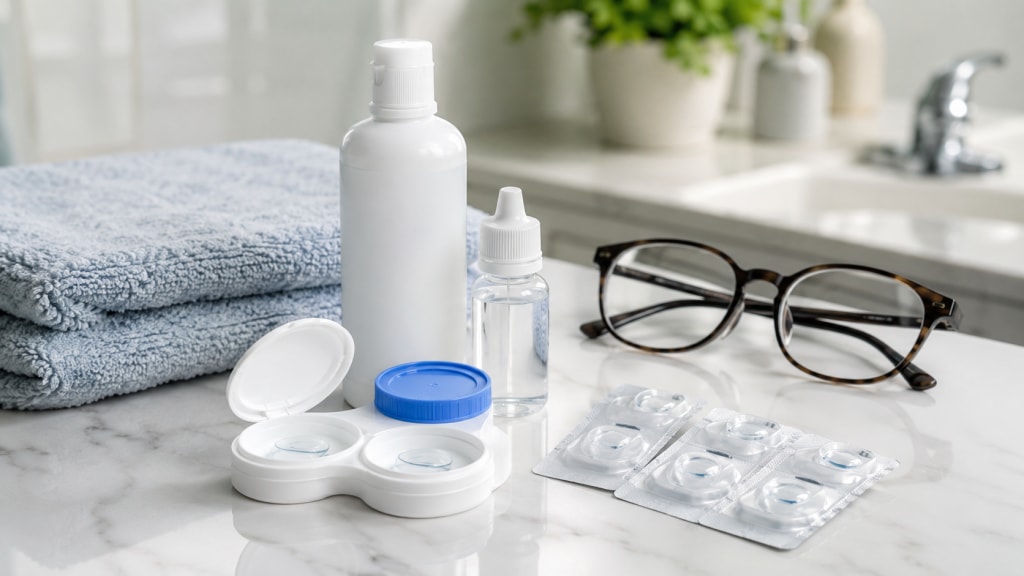
Start with the symptom, not the product name. If contacts feel hazy after work, discuss daily disposables. If lights look stretched or doubled, ask about toric lenses. If glare stays with clean lenses, ask about aspheric optics or an eye health check.
- Choose daily disposable contacts if buildup or end-of-day haze affects clarity.
- Choose ACUVUE daily contacts if you already do well with ACUVUE.
- Choose toric lenses if astigmatism makes headlights streak, double, or smear.
- Choose DAILIES toric contacts if you need astigmatism correction in a daily lens.
- Choose multifocal contacts after trial fitting if night contrast feels weaker.
Choose 30 day contact lenses if reusable lenses stay clear through evening wear.
Where to Buy Contact Lenses for Night Driving Discomfort
You can buy prescribed lenses online once your eye doctor confirms the product, power, base curve, diameter, and other parameters. 1-800-GET-LENS has pages for daily, toric, multifocal, ACUVUE, DAILIES, Biofinity, and monthly lenses, so you can compare options tied to your prescription.
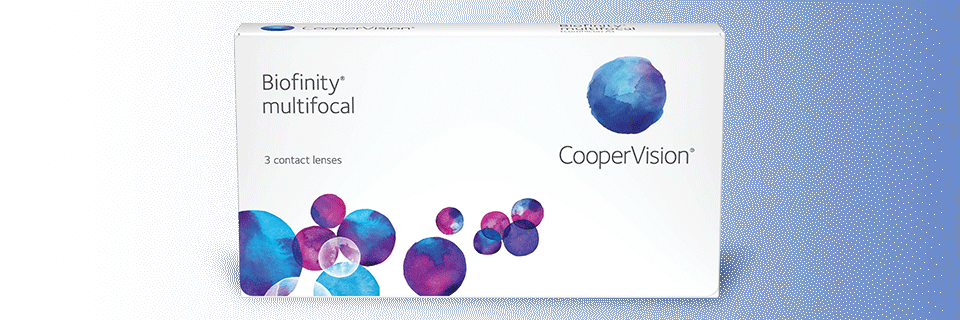
For monthly wearers, Biofinity contact lenses can fit the discussion around comfort and visual distortion. For presbyopia, contact lenses for presbyopia can help you compare multifocal options before trial fitting.
When to See an Eye Doctor Before Driving at Night
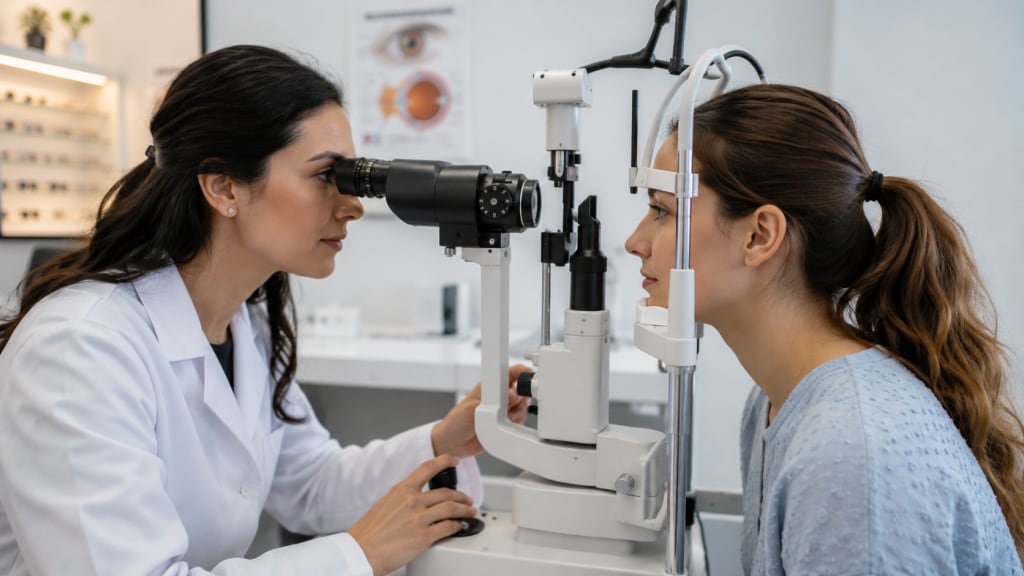
Book an eye exam if glare, halos, starbursts, or blurry night vision keeps getting worse. Call your eye doctor if you notice pain, redness, sudden blur, light sensitivity, or watery eyes with contacts. Remove your lenses and wear glasses until advised.
Bring the following to your visit:
- Your current contact lens boxes or product details
- Your backup glasses
- Notes about when the glare starts
- Details about how headlights look at night
- Your average daily contact lens wearing time
- Any drops, lens liquid, or cleaning products you use
- A list of symptoms such as dryness, redness, blur, or light sensitivity
These details can help your eye doctor check for dryness, astigmatism, deposits, toric lens rotation, prescription changes, or eye health concerns.
FAQs About Contact Lenses for Night Driving
Are There Contact Lenses Specifically Designed for Night Driving?
No. Contact lenses are not made only for night driving. Ask which lens type fits your nighttime symptoms. Daily disposables, toric lenses, aspheric contacts, and moisture-focused lenses can help different causes of glare or blur after dark.
What Contact Lenses Reduce Glare From Headlights?
No contact lens removes headlight glare for every wearer. Helpful lenses depend on the cause. Toric lenses can help astigmatism. Daily disposables can reduce buildup. Moisture-focused lenses can reduce dry-eye fluctuations. Aspheric contacts can help certain higher-order distortions.
Do Aspheric Contact Lenses Really Help With Night Driving?
Yes, for some wearers. Aspheric contact lenses can reduce spherical aberration, which can sharpen light edges after dark. They are not a cure for dryness, deposits, cataracts, or an outdated prescription, so ask your doctor about fit.
Can Toric Lenses Improve Night Vision for Astigmatism?
Yes. Toric lenses can improve night vision when astigmatism causes blur, streaks, or doubled headlights. A stable fit is important. If the lens rotates, vision can shift, so ask about designs made to keep toric lenses steady.
What Should I Do If Contacts Cause Dry Eyes While Driving?
Use only rewetting drops approved for contact lenses, then switch to backup glasses if vision stays blurry. Dryness that keeps returning needs an eye exam. Your doctor can review lens material, wearing schedule, tear film, and daily disposable options.
Can Colored Contacts Affect Night Driving?
Yes. Colored contacts can affect night driving if the printed area limits your clear pupil zone or the lens shifts. Low light widens pupils, so vision can look dim or blocked. Wear only prescribed colored contacts, and avoid driving if clarity feels reduced.
Disclaimer: This article is for general information only. It does not replace advice, diagnosis, or treatment from an eye doctor.
References
- About Cleaning, Disinfecting, and Storing Contact Lenses. https://www.cdc.gov/contact-lenses/about/about-cleaning-disinfecting-and-storing-contact-lenses.html. Accessed June 10, 2026
- About Contact Lenses. https://www.cdc.gov/contact-lenses/about/index.html. Accessed June 10, 2026
- Aberration Neutralizing System. https://coopervision.com/product-technology/aberration-neutralizing-system. Accessed June 10, 2026
- ACUVUE OASYS 2-Week Contact Lenses for Astigmatism. https://www.acuvue.com/en-us/products/acuvue-oasys-astigmatism/. Accessed June 10, 2026
- Astigmatism. https://www.aoa.org/healthy-eyes/eye-and-vision-conditions/astigmatism. Accessed June 10, 2026
- Biofinity Contact Lenses. https://coopervision.com/contact-lenses/biofinity-contacts. Accessed June 10, 2026
- DAILIES TOTAL1 Daily Disposable Contact Lenses. https://total.myalcon.com/products/dailies-total1/. Accessed June 10, 2026
- DAILIES TOTAL1 Contact Lenses with Water Gradient and SmarTears Technology. https://www.alconscience.com/en-IN/resource/dailies-total1r-contact-lenses-water-gradient-and-smartearsr-technology/. Accessed June 10, 2026
- Driving at Night. Do Yellow-Tinted Lenses Improve Vision? https://www.aao.org/eye-health/tips-prevention/driving-at-night. Accessed June 10, 2026
- FDA Clears First Light-Adaptive Contact Lenses. https://www.aao.org/education/headline/fda-clears-first-light-adaptive-contact-lenses. Accessed June 10, 2026
- Help Patients See the Light When Driving at Night. https://www.aoa.org/news/clinical-eye-care/health-and-wellness/help-patients-see-the-light-when-driving-at-night. Accessed June 10, 2026
- How to Take Care of Contact Lenses. https://www.aao.org/eye-health/glasses-contacts/contact-lens-care. Accessed June 10, 2026
- Pedestrian Detection With and Without Yellow-Lens Glasses During Simulated Night Driving With and Without Headlight Glare. https://jamanetwork.com/journals/jamaophthalmology/fullarticle/2740739. Accessed June 10, 2026