Glasses Measurements: What Do the Numbers on Your Frames Mean?
Table of Contents
Have you ever wondered about the tiny numbers inscribed on the inside of your glasses’ arm? You’re not alone. These numbers aren’t just a random code; they are your glasses’ measurements, a key to finding a perfect fit that is both comfortable and stylish. A difference of just a few millimeters can completely change how a pair of glasses feels and looks on your face.
Understanding these measurements can take the guesswork out of shopping for new frames, especially when you’re browsing online. This guide will show you what the numbers mean, how to measure them yourself, and how they can help you find your next great pair of glasses.
What Do the Numbers on Your Glasses Mean?
If you look closely at the inside of one of your frame arms, you’ll likely see a series of numbers, typically in the order of lens width, bridge width, and temple length. These numbers are always expressed in millimeters and are often separated by a small square or a dash.
Lens Width – Also known as “eye size,” this is the first number. It measures the horizontal width of each lens at its widest point. This measurement is about the size of the lens itself and doesn’t include the frame surrounding it.
Bridge Width – This is the second number. It measures the shortest distance between the two lenses. This measurement is crucial for how the frames sit on your nose. A smaller bridge width is best for narrower noses, while a larger one works for wider noses.
Temple Length – This is the third number. It measures the length of the arm of your glasses, from the hinge at the frame to the very tip that rests behind your ear. Getting this right is important to ensure the arms are long enough to fit securely without protruding too far.
How Can You Measure Your Own Frames?
If the numbers on your old glasses have worn off, or you just want to double-check them, you can easily take the measurements yourself. All you need is a soft measuring tape or a small ruler that shows millimeters.
To measure lens width – Measure horizontally across one lens at its widest point.
To measure bridge width – Measure the shortest distance between the two lenses.
To measure temple length – Measure the arm of your glasses from the hinge to the very tip.
What If You Don't Have an Old Pair to Measure?
If you’re buying glasses for the first time or simply don’t have an old pair to reference, there are still ways to find a good fit. During a professional eye exam, your optometrist will take precise measurements, including your pupillary distance (PD), which is the distance between your pupils. This number is essential for making sure the center of each lens aligns perfectly with your eyes for the best vision.
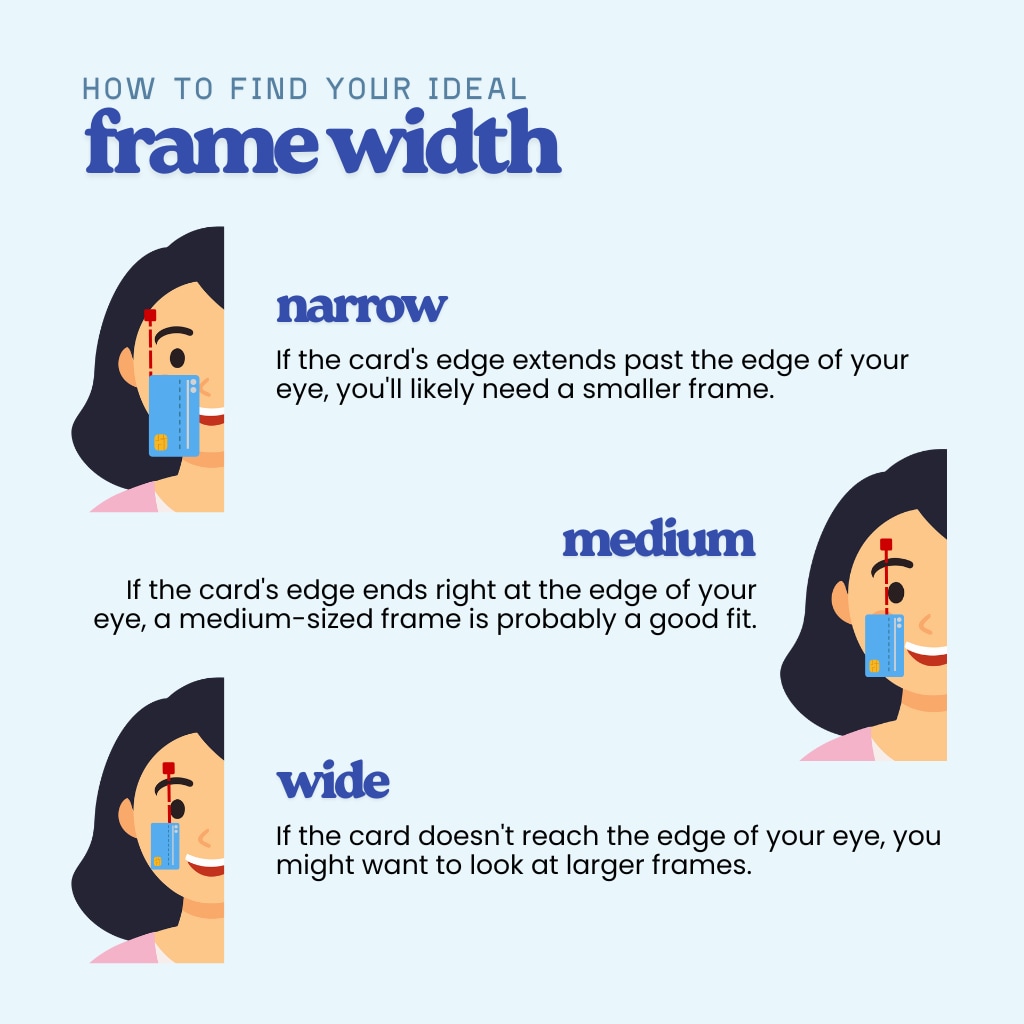
There’s also a simple, memorable trick you can use to get a rough estimate of your ideal frame size: the “credit card trick.” The short edge of a standard credit card is about 54 millimeters long. Hold the card horizontally against your face, aligning one edge with the middle of your nose.
If the card’s edge extends past the edge of your eye, you’ll likely need a smaller frame.
If the card’s edge ends right at the edge of your eye, a medium-sized frame is probably a good fit.
If the card doesn’t reach the edge of your eye, you might want to look at larger frames.
While this is just an estimate, it’s a fun and practical way to start your search.
Finding Your Perfect Fit at 1-800-GET-LENS
Knowing your measurements is a powerful tool when shopping for new glasses. It’s a great starting point, especially if you love the fit of a current pair.
1-800-GET-LENS makes it simple to use your measurements to find a frame that works for you. With our wide selection of frames, you can easily browse by size and style to find a pair that feels right.
Measurements are a helpful guide, but personal comfort and style are what truly matter. The best way to find a frame you love is to try them on and our online tools make that easy.