Table of Contents
As we age, it’s normal for our vision to change. Sometimes, eyesight can worsen due to a variety of reasons—from lifestyle habits to age-related conditions. Whether it’s difficulty seeing up close or blurry vision, it’s important to understand the underlying causes of these changes. If you notice any shift in your eyesight, scheduling an eye exam is always the best course of action.
In this blog, we’ll explore common causes of worsening eyesight, tips for maintaining healthy vision, and when to consult your eye doctor for guidance.
Common Causes of Worsening Eyesight
There are several reasons why your vision may be getting worse. While some are related to aging, others can occur at any age and may be tied to lifestyle habits or other factors.
- Presbyopia – As you age, the lenses in your eyes lose flexibility, making it harder to focus on nearby objects. This condition typically starts affecting people in their 40s and may cause difficulty reading up close.
- Dry Eyes – Dryness, which can be caused by aging or extended screen use, may lead to blurry vision. As the tear film becomes insufficient, your eyes may feel irritated and vision may fluctuate throughout the day.
- Eye Strain – Spending long hours staring at digital screens or doing close-up work can cause digital eye strain, leading to discomfort, blurry vision, and headaches.
- Cataracts – A clouding of the eye’s lens that typically occurs in older adults, cataracts cause blurry or hazy vision, increased glare, and difficulty seeing at night.
- Glaucoma – A group of eye conditions that can damage the optic nerve, glaucoma is one of the leading causes of blindness. It can cause peripheral vision loss, blind spots, and eye discomfort.
- Age-Related Macular Degeneration (AMD) – A condition that affects the macula, which is responsible for central vision, AMD can lead to difficulty seeing faces, reading, or driving, especially in low-light conditions.
Understanding the common causes of worsening eyesight can help you identify the issue and determine whether it’s time for an eye exam. Regular checkups with your optometrist can ensure that any changes in your vision are addressed early.
How Age Affects Your Eyesight
As we age, our eyes naturally undergo changes that can lead to worsening vision. Age-related conditions like presbyopia, cataracts, and AMD are common culprits for vision changes.
Presbyopia is a condition where the eye’s lens becomes less flexible, making it harder to focus on close objects. This usually starts around age 40 and may require reading glasses or bifocals.
Cataracts are another age-related issue where the lens of the eye becomes cloudy, affecting the clarity of your vision. Cataracts typically affect people over the age of 55 and are one of the most common causes of vision loss.
Age-related macular degeneration (AMD) can lead to the gradual loss of central vision, making it difficult to perform daily tasks like reading and driving. This is the leading cause of vision loss in people over 50.
While these changes are natural, some people may experience these conditions earlier or at a more severe rate. That’s why it’s essential to stay on top of your eye health and have regular eye exams to detect and address any age-related changes in your vision.
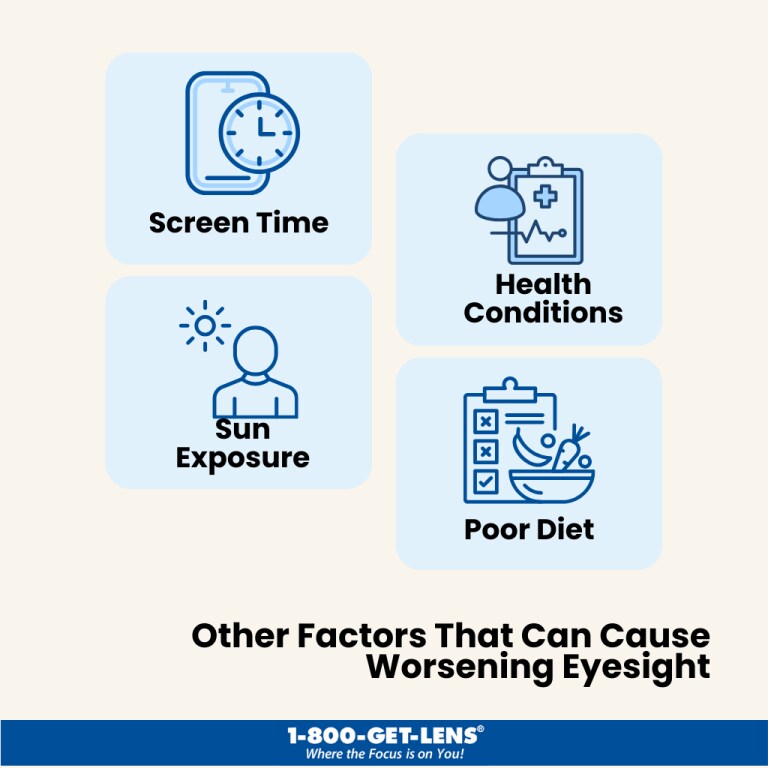
Other Factors That Can Cause Worsening Eyesight
Besides aging, several factors can contribute to worsening eyesight at any age. These factors often stem from lifestyle choices, underlying health conditions, or environmental factors.
- Screen Time. Spending long hours in front of computers, smartphones, and other digital devices can cause digital eye strain. This condition is characterized by dry eyes, blurry vision, headaches, and neck pain. If left unchecked, prolonged screen time can lead to more serious eye discomfort.
- Sun Exposure. Prolonged exposure to ultraviolet (UV) light can damage the eyes over time, leading to issues like cataracts and macular degeneration. Always wear sunglasses that offer UV protection when you’re outside.
- Health Conditions. Certain medical conditions such as diabetes, high blood pressure, and autoimmune diseases can impact your vision. Conditions like diabetic retinopathy can cause bleeding in the retina, leading to vision problems if not managed.
- Poor Diet. A diet lacking in essential nutrients, particularly vitamins A, C, and E, can affect eye health. Eating a balanced diet rich in antioxidants and omega-3 fatty acids can help maintain good vision.
In addition to these factors, regular use of certain medications, smoking, and a lack of sleep can all negatively impact your eye health and contribute to worsening eyesight.
How to Maintain Healthy Eyesight
Maintaining healthy eyesight doesn’t have to be complicated, but it does require consistent effort. One of the most important steps is to get regular eye exams. Scheduling routine checkups with your eye doctor is crucial, as they can check for any signs of eye disease or vision changes and ensure you have the right prescription. Regular exams also help detect potential issues early, allowing for prompt treatment.
If you spend long hours in front of a screen, it’s essential to practice the 20-20-20 rule. Every 20 minutes, take a short break and look at something 20 feet away for at least 20 seconds. This simple habit helps reduce the risk of digital eye strain, which can cause discomfort, blurry vision, and headaches.
Additionally, protecting your eyes from the sun is important. Use sunglasses that provide UV protection whenever you’re outdoors. UV rays can contribute to cataracts and other eye conditions, so wearing sunglasses can shield your eyes from harmful exposure and preserve your long-term eye health.
Finally, staying hydrated and eating a healthy diet can play a significant role in maintaining eye health. Drinking plenty of water and consuming foods rich in vitamins and antioxidants—such as leafy greens, carrots, and fish—nourishes your eyes and helps keep them functioning properly. Proper hydration also supports tear production, which is essential for keeping your eyes moist and comfortable.
When to Talk to Your Eye Doctor
If you notice changes in your vision, such as blurred vision, difficulty seeing at night, or increased sensitivity to light, it’s important to speak with your eye doctor. Even minor changes can be a sign of an underlying issue, so early intervention is key.
If you’re experiencing digital eye strain, try taking breaks from screens, staying hydrated, and using artificial tears to lubricate your eyes. However, if discomfort persists, consult your optometrist for advice on proper lenses or possible treatments.
Your eye doctor can also help if you experience more severe symptoms, such as sudden vision loss, flashes of light, or eye pain. These could be signs of more serious conditions that need immediate attention.
FAQs
Why is my vision getting blurry?
Blurry vision can be caused by a variety of factors, including eye strain, dry eyes, or an outdated prescription. If the blurriness persists, it’s best to consult your eye doctor.
How often should I get an eye exam?
It’s recommended to schedule an eye exam at least once every two years, though more frequent exams may be necessary if you have existing vision problems or underlying health conditions.
Can eye strain make my vision worse?
Yes, prolonged screen time can lead to digital eye strain, causing blurry vision, headaches, and discomfort. Taking regular breaks and using the 20-20-20 rule can help alleviate these symptoms.
Take Action to Preserve Your Eye Health
Whether your vision is changing due to age, lifestyle, or external factors, it’s important to stay on top of your eye health. Regular eye exams, proper hydration, and the right eyewear or contact lenses can help prevent unnecessary deterioration of your eyesight.
If you’re experiencing changes in your vision or are in need of a new prescription, be sure to check out 1-800-GET-LENS for a wide selection of trusted contact lens brands to keep your eyes healthy and comfortable.